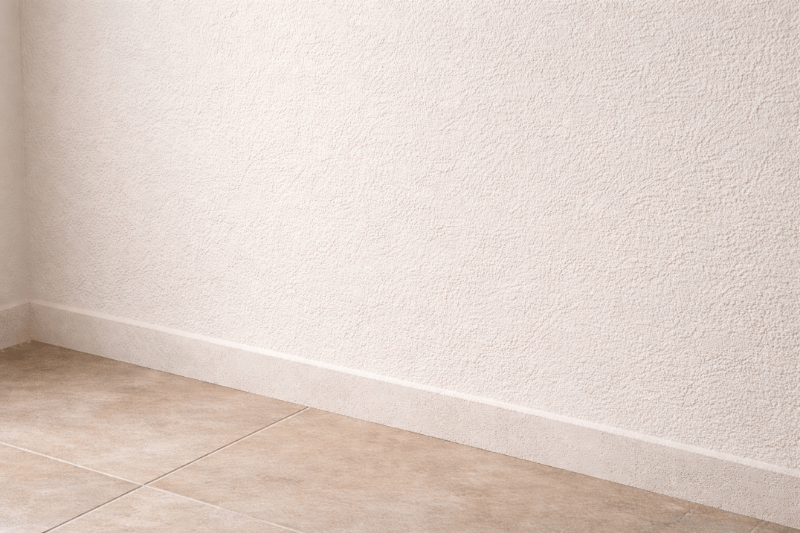

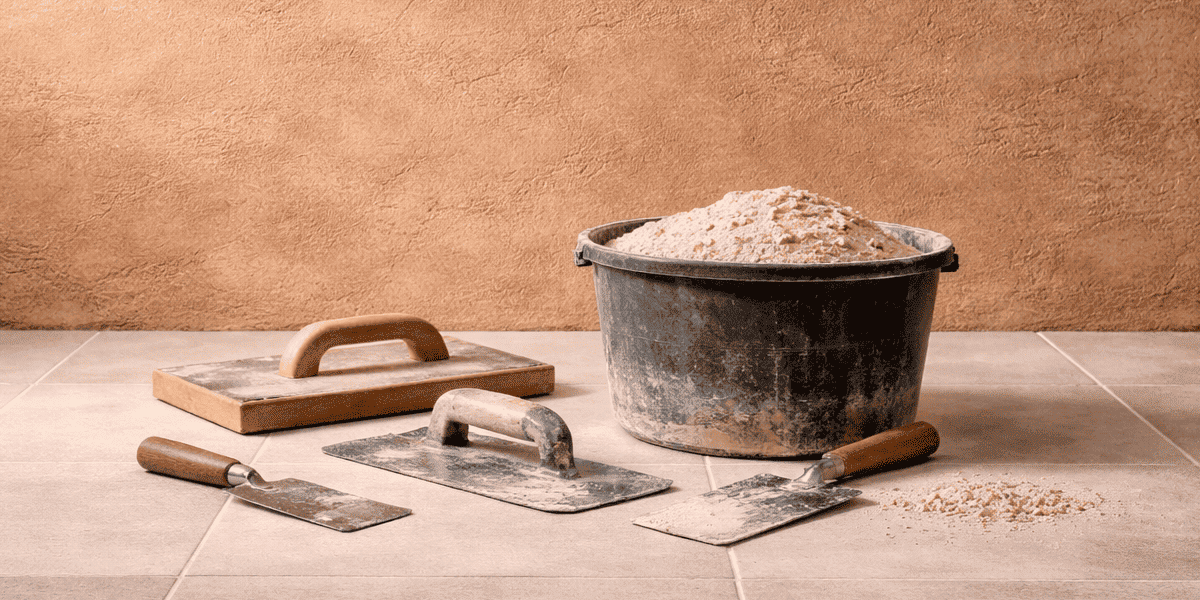
Everything you need to know about lime: a natural material with centuries of history that is once again the protagonist of contemporary architecture and decoration.
In recent years, more and more people interested in natural decoration, healthy architecture and sustainable materials are rediscovering a material with thousands of years of history: lime.
Although for decades it was displaced by industrial materials such as cement or plastic paints, lime never completely disappeared. In fact, many of the Mediterranean’s best-preserved historic buildings—from traditional whitewashed houses to palaces and monasteries—have one thing in common: they were built or clad in lime.
Today, architects, interior designers and designers are once again looking at this material for its unique qualities. Lime allows you to create natural mineral finishes, breathing walls, textured surfaces and a serene aesthetic that fits perfectly with current interior design trends.
But in addition to its beauty, lime offers very interesting advantages for living spaces: it regulates humidity, is compatible with traditional materials and contributes to creating healthier indoor environments.
In this guide we are going to go through the essentials to understand this material:
If you’re thinking about using mineral paints, lime stuccoes, or natural coatings, understanding how lime works is the first step in choosing the right finish.
Lime is a mineral material that is obtained from limestone, a natural rock that is very abundant in nature and formed mainly by calcium carbonate.
For thousands of years, humans have used lime as one of the main building and finishing materials. It has been used to create mortars, paints, plasters and stuccoes that can still be seen today in historic buildings around the world.
The interesting thing about lime is that, unlike many modern materials, it is part of a very simple natural cycle: part of the stone, is transformed by heat and water, and finally becomes stone again over time.
This behaviour is precisely what makes lime coatings extraordinarily durable and have a very characteristic mineral appearance.
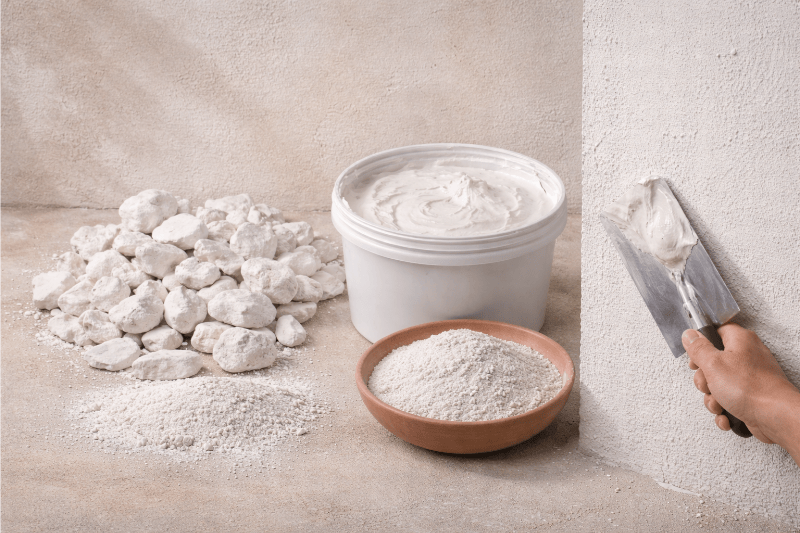
Unlike synthetic paints or industrial coatings, lime belongs to the family of natural mineral materials.
This means that:
For this reason, lime has traditionally been used both in folk architecture and in high-quality decorative coatings.
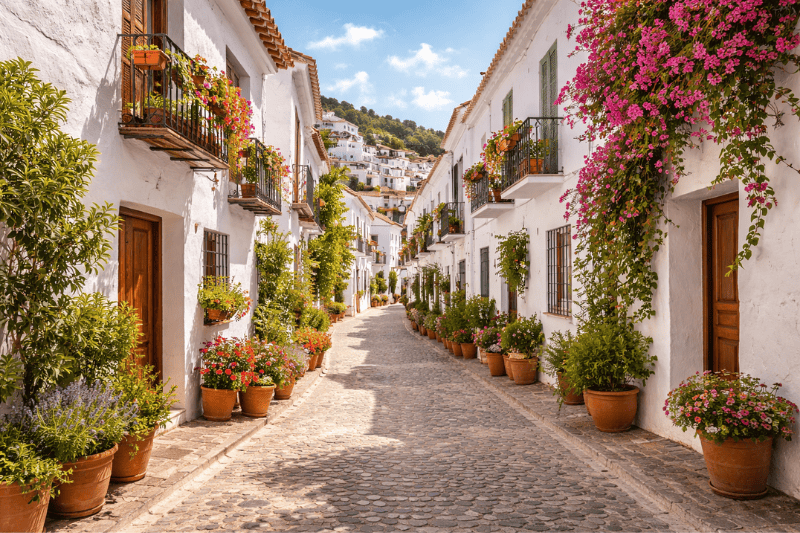
In many regions of the Mediterranean, lime has for centuries been the main material for:
The well-known whitewashed houses of Mediterranean villages are probably the most visible example of their traditional use. These whitewashes not only provided a luminous and uniform aesthetic, but also helped to protect the walls and improve the thermal behaviour of the houses.
In recent decades, lime has reawakened great interest in areas such as:
This is because their properties fit very well with current needs: natural materials, compatible with traditional supports, breathable and with a reduced environmental impact.
In addition, thanks to new formulations and application techniques, it is now possible to use lime to create a wide variety of decorative finishes, from soft mineral paints to polished stuccoes or continuous coatings with a contemporary look.
For all these reasons, lime has gone from being a material associated only with traditional architecture to becoming one of the great protagonists of today’s natural decoration.
The history of lime is, in many ways, the history of architecture itself. Long before the advent of modern cement or synthetic cladding, lime was already used to build, protect and decorate buildings.
Over thousands of years, different civilizations discovered that heating limestone and then mixing it with water resulted in an extraordinarily versatile material. It could be used to manufacture mortars, plasters and paints capable of protecting walls, improving the comfort of homes and creating durable decorative surfaces.
Most surprisingly, many of those buildings are still standing today, demonstrating the extent to which lime has been a reliable and resilient material over time.
The first evidence of the use of lime in construction dates back thousands of years. Civilizations such as the Egyptians, Greeks and Romans already used lime mortars to build walls, cover surfaces and make decorative finishes.
It was especially the Romans who perfected the use of this material. Thanks to lime they developed mortars capable of joining stone, brick and other materials, allowing the construction of aqueducts, baths, villas and public buildings that are still preserved today.
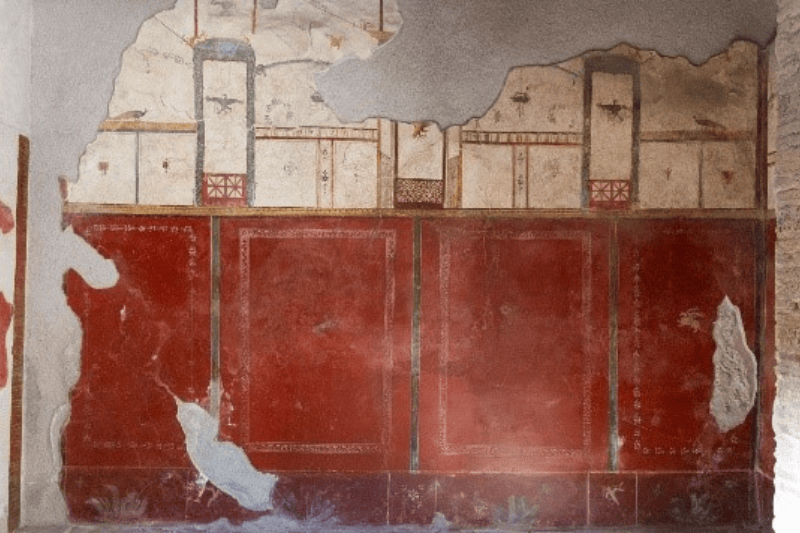
In addition to its structural function, lime was also used in decorative coatings. Roman stuccoes, polished and worked with great precision, made it possible to create smooth, shiny or textured walls, often painted with mineral pigments.
This decorative use of lime laid the foundation for many techniques that are still used today.
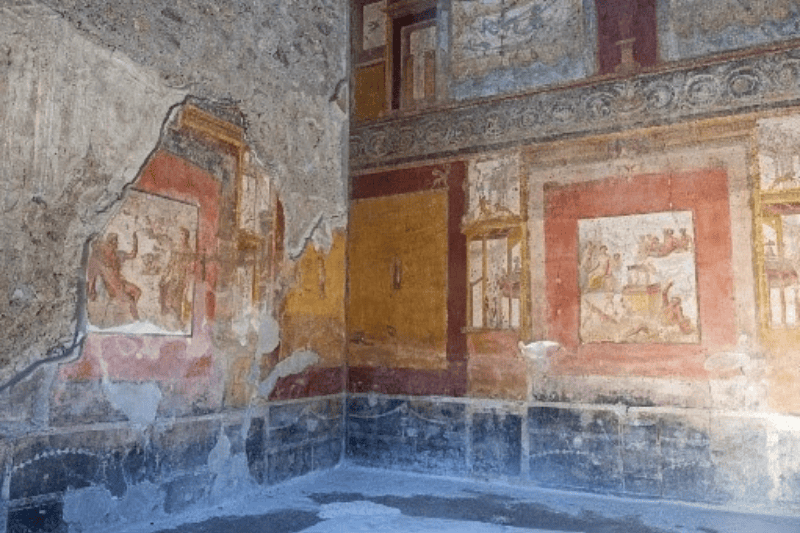
In many regions of the Mediterranean, lime became an everyday material for centuries. It was easy to produce locally, relatively inexpensive, and offered very useful properties for traditional housing.
One of the most characteristic uses was the whitewashing of facades. Applied as a mineral paint, lime made it possible to cover stone, adobe or mortar walls with a luminous white layer that also protected the surfaces.
This liming fulfilled several important functions:
For this reason, many towns in southern Europe developed a very recognizable aesthetic: villages of white houses where lime is part of the landscape and architectural culture.
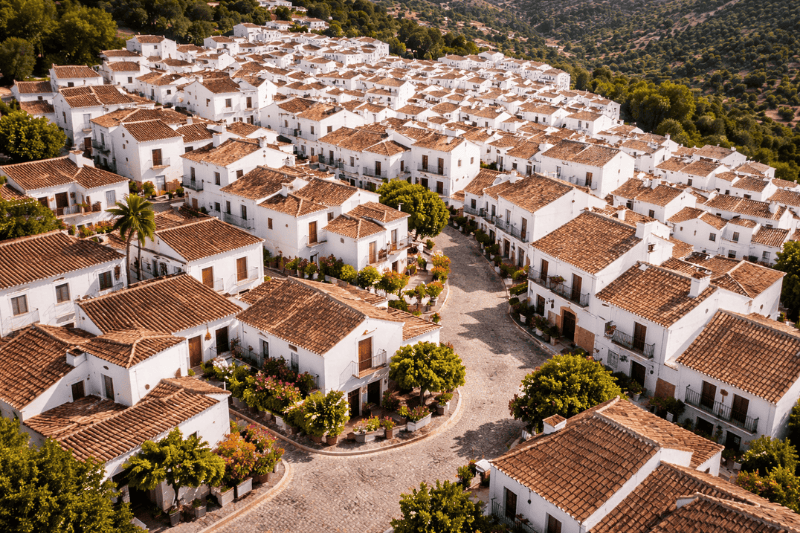
Beyond its functional use, lime has also been the protagonist of some of the most sophisticated decorative finishes in history.
In different parts of the Mediterranean, techniques based on lime emerged that allowed very refined surfaces to be created, with depth and texture. Some well-known examples are:
These techniques show how a seemingly simple material can be transformed into decorative finishes of great beauty and artisanal quality.
For much of the 20th century, lime was displaced by industrial materials such as cement or synthetic paints, which allowed for faster and more standardized applications.
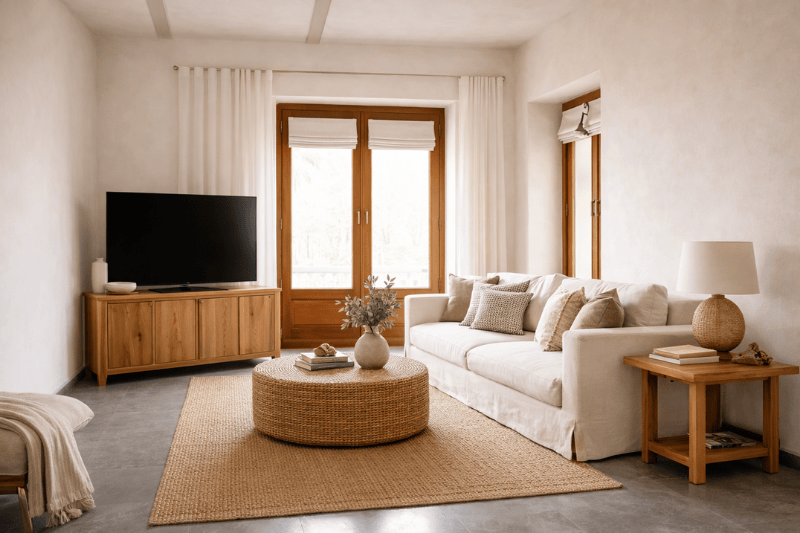
However, in recent decades the situation has changed. Architects, designers and interior designers have become interested in lime again for several reasons:
Today, lime is once again present both in the rehabilitation of historic buildings and in contemporary architecture and interior decoration projects.
Mineral paints, lime stuccoes and continuous coatings based on this material are recovering traditional techniques and adapting them to current spaces, demonstrating that lime is still a fully valid material after thousands of years of history.
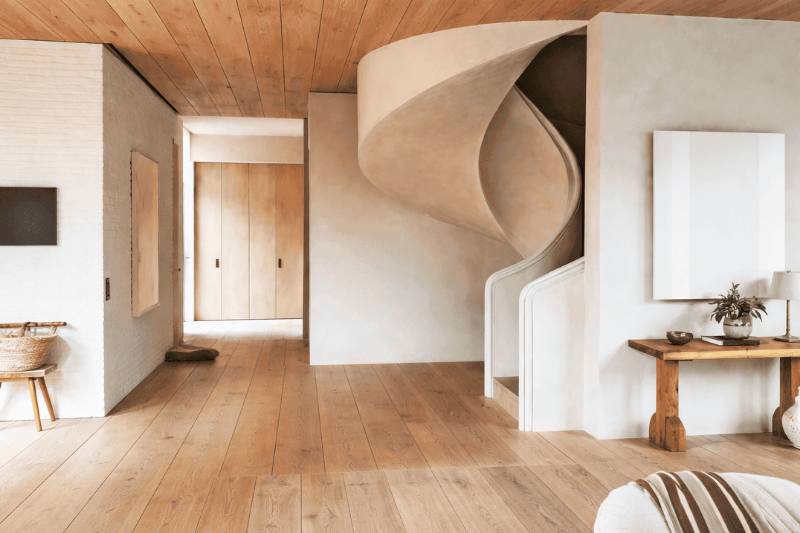
There is something very special about lime: although it is used in architecture and decoration, it is actually part of a very simple natural cycle.
Part of a rock, it is transformed by heat and water, and over time it turns back into stone.
This process is known as the lime cycle, and understanding it helps to understand why lime coatings have such interesting properties as their durability, breathability or ability to integrate naturally into buildings.
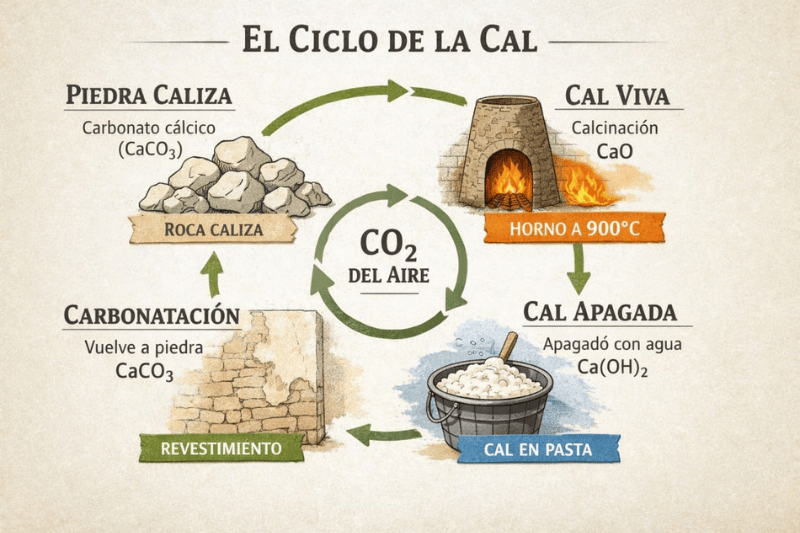
In a simple way, the manufacture of lime can be explained in four main stages.
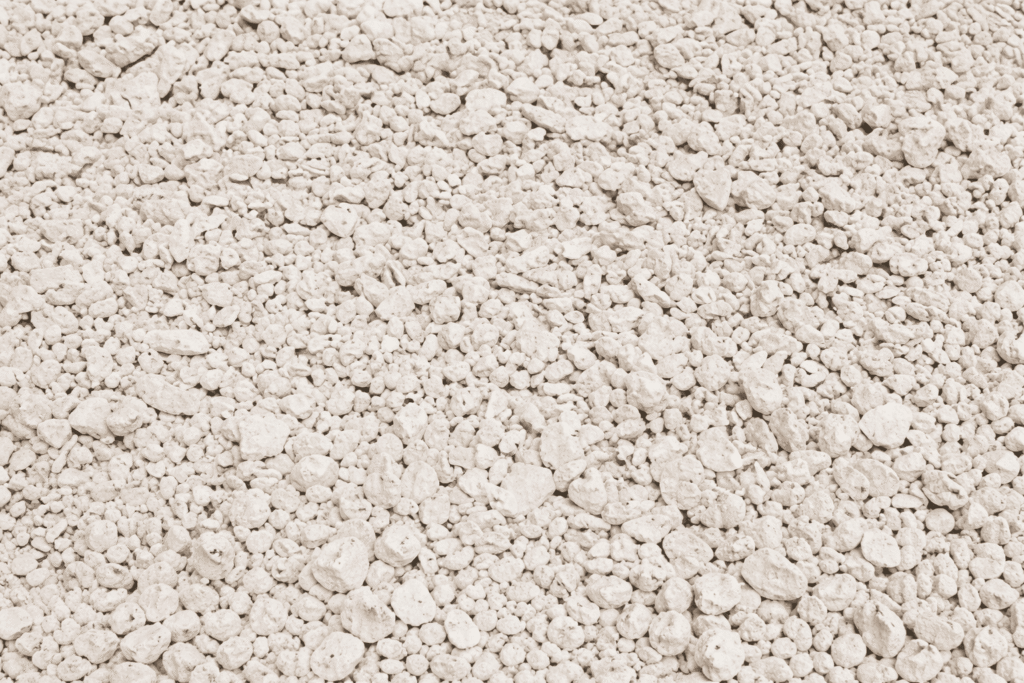
It all starts with limestone, a sedimentary rock that is very abundant in nature. This stone is mainly composed of calcium carbonate, the same mineral found in seashells or in some fossils.
For thousands of years, this stone has been quarried for use in construction, both in the form of blocks and to make lime.
Limestone is the starting point for the entire process: it is used to obtain the raw material that will then be transformed into different types of lime used in mortars, paints and coatings.
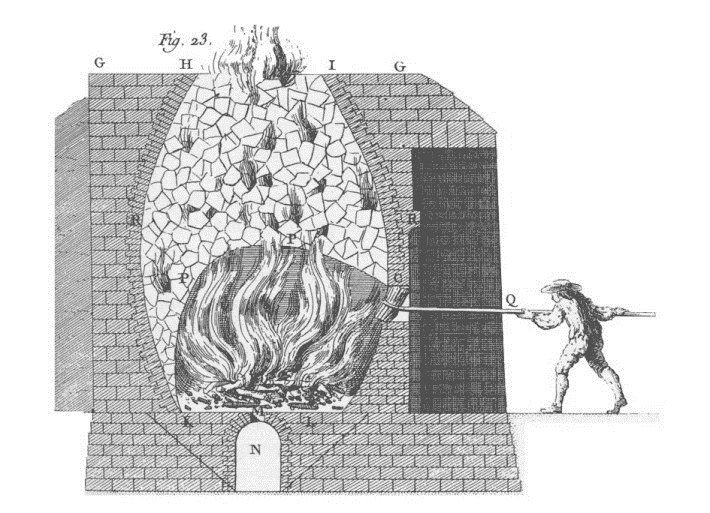
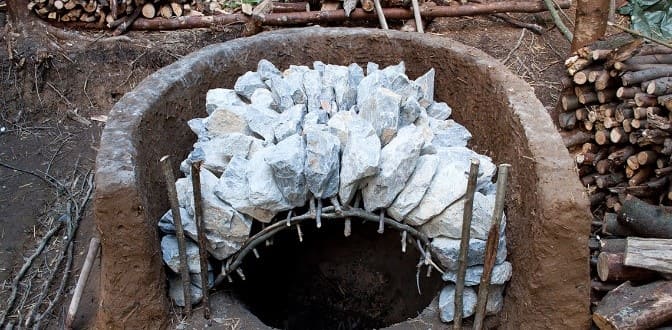
The next step is to heat the limestone in a kiln to very high temperatures, usually above 900 °C.
During this process, known as calcination, the stone loses carbon dioxide and is transformed into a new material called quicklime.
Quicklime is very reactive and must be handled with care. It is not used directly in construction, but needs an extra step to become a stable and manageable material.
Historically, this firing was carried out in traditional lime kilns, stone structures where rock was introduced along with fuel. In many regions these ovens are still preserved as part of the architectural heritage.
When quicklime comes into contact with water, an intense chemical reaction called limescale quenching occurs.
In this process, quicklime is transformed into slaked lime or hydrated lime, a much more stable material suitable for use in construction.
Depending on how the shutdown is performed, two main forms of limescale can be obtained:
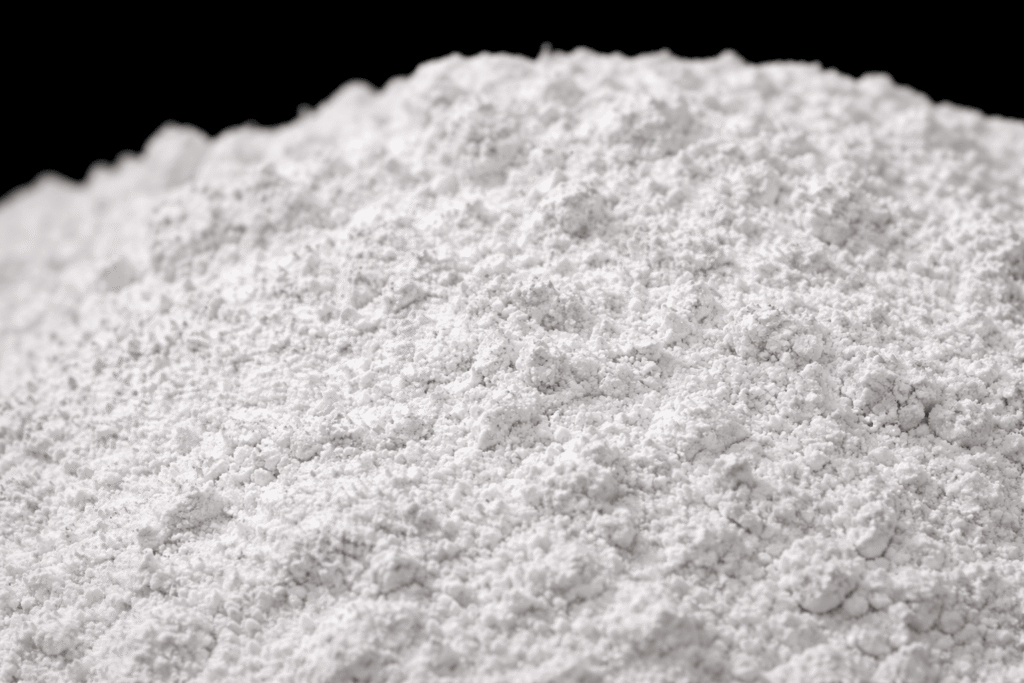
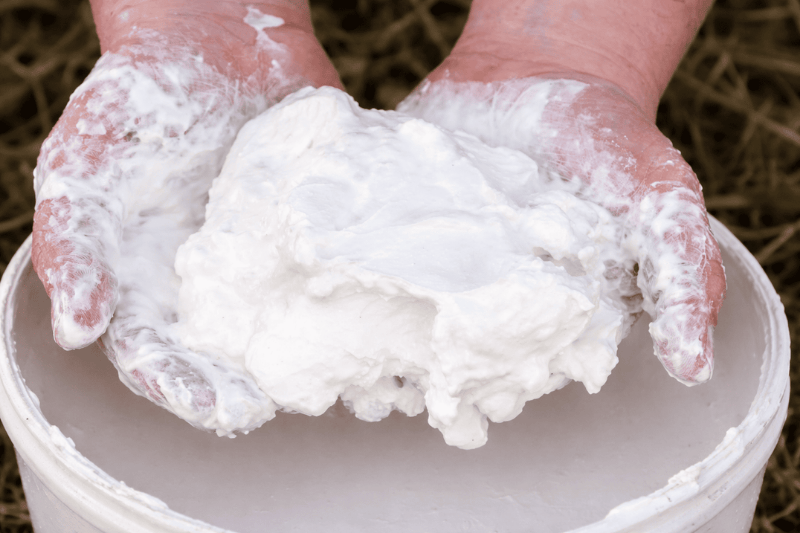
When left to age for months or even years, lime paste acquires a particularly fine and workable texture, which makes it ideal for high-quality decorative coverings.
The last step of the cycle occurs once the lime has already been applied to a wall, mortar, or coating.
Over time, limescale slowly reacts with carbon dioxide present in the air, initiating a process called carbonation. Thanks to this reaction, the lime is transformed back into calcium carbonate, i.e. it turns back into stone.
This phenomenon explains why lime mortars and coatings can last so long: over the years they harden naturally, gradually integrating with the substrate.
In a way, the cycle is complete: the limestone that was transformed by fire and water slowly returns to its original state, being part of the architecture for decades or even centuries.
Understanding this cycle helps to understand why lime is considered such a consistent material with traditional architecture and sustainable construction.
Not only does it come from an abundant natural resource, but it also works in harmony with mineral materials and with the very functioning of the walls.
The manufacture and operation of lime can be understood as a natural cycle in four stages: from limestone to its final transformation back into stone when the material is carbonated in the wall.
Although we usually talk about simply “lime”, there are actually different types of lime, each with specific properties and uses in construction and decoration.
The two large families are:
Both are obtained from limestone, but their behavior and applications can be quite different.
Understanding this difference is important in order to choose the right material according to the type of project, the support or the humidity conditions of the space.
Aerial lime is the most traditional form of lime used in historic architecture.
It receives this name because it hardens in contact with air. The process occurs when limescale slowly reacts with carbon dioxide in the environment, a phenomenon known as carbonation.
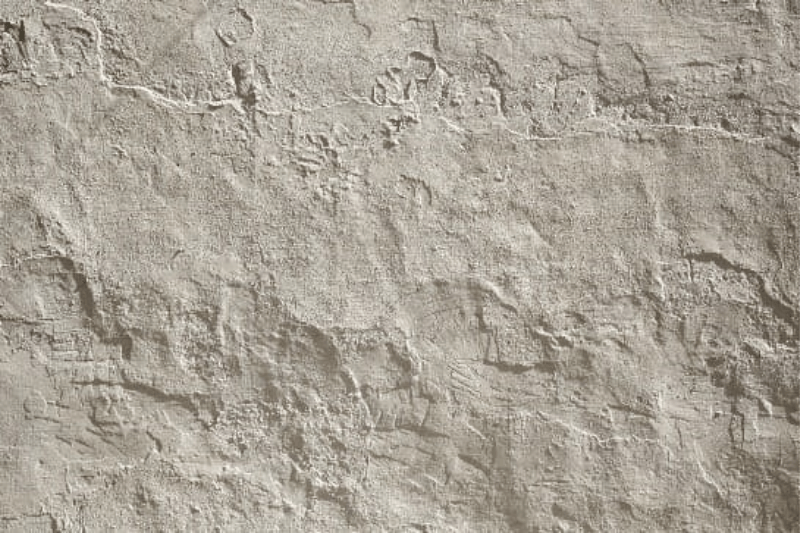
This hardening is relatively slow, but over time the material can achieve great durability.
Among its most outstanding features we find:
For these reasons, aerial lime is frequently used in:
In addition, when used in the form of aged lime paste, it allows for finishes of great aesthetic quality and very fine texture.
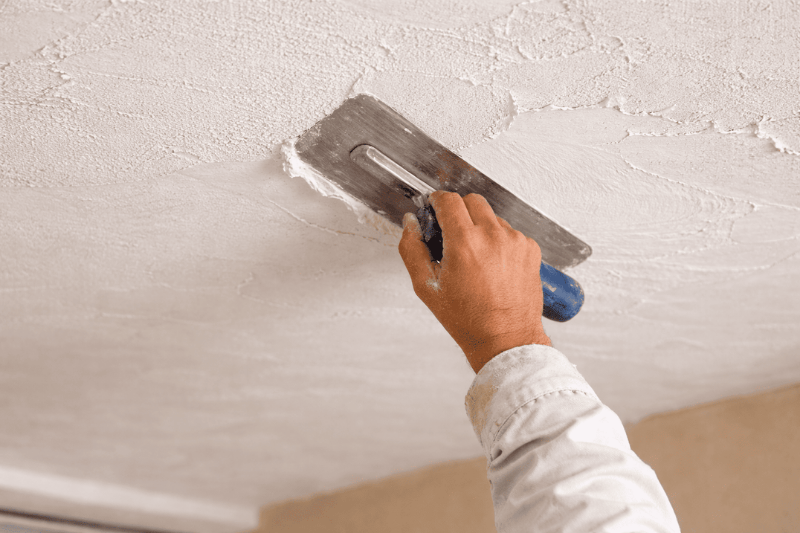
Hydraulic lime has a different behavior. Unlike aerial limescale, it can harden in the presence of water, making it especially useful outdoors or in areas with higher humidity.
This type of lime naturally contains small amounts of clays or minerals that allow the material to set even without direct contact with air.
Among its main features are:
For these reasons, hydraulic lime is frequently used in:
In many cases, hydraulic lime is used as an alternative that is more compatible with traditional materials than cement.
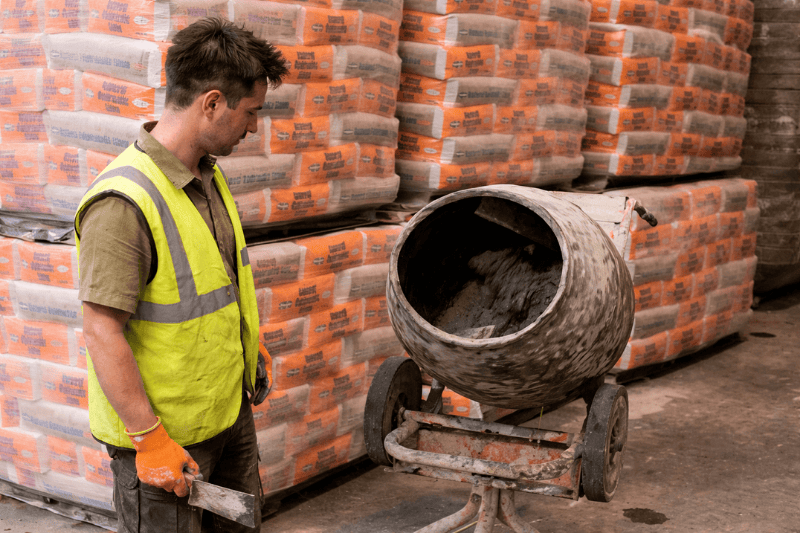
To better understand their differences, we can summarize their main characteristics in the following table:
| Ownership | Aerial lime | Hydraulic lime |
| How it hardens | Hardens by reacting with CO₂ in the air (carbonation) | Hardens on contact with water (hydraulic setting) |
| Hardening Speed | Slower | Faster |
| Hardening | From the outside in | Homogeneous across all material |
| Cooking temperature | Approximately 900–1000 °C | Approximately 1200–1400 °C |
| Mechanical resistance | Minor without additives | Increased strength on its own |
| Plasticity and workability | Very plastic | Less plastic |
| Breathability | Very high | High |
| Natural properties | Bactericidal, antiseptic and fungicidal | Also present, although somewhat smaller |
| Cracking | Very low under optimal conditions | Low in optimal conditions |
The choice between aerial or hydraulic lime depends mainly on where and how the material is to be used.
In general terms:
Both materials are part of the European construction tradition and, when used well, make it possible to create durable, breathable cladding that is compatible with the natural materials of buildings.
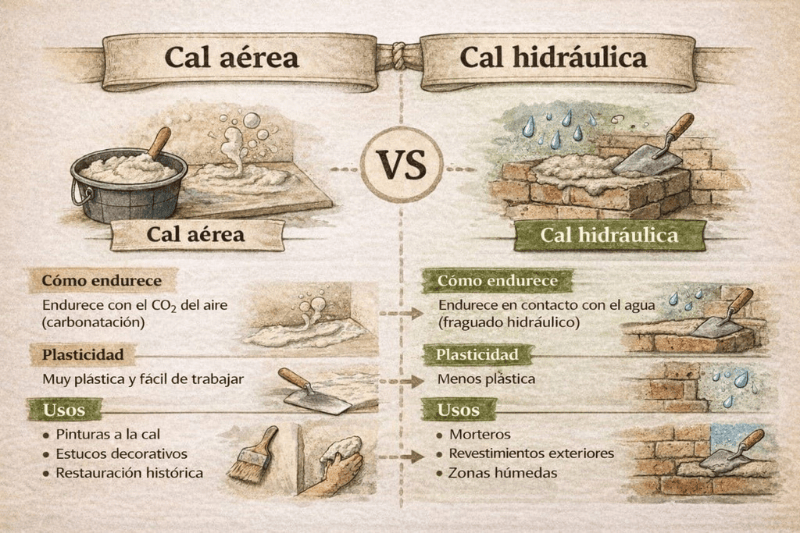
Beyond its history or its different types, lime continues to arouse interest today for a very specific reason: its properties fit very well with the current way of understanding architecture and decoration.
At a time when we increasingly value natural materials, healthy interiors and durable finishes, lime once again stands out as a particularly consistent choice.
It is not just an aesthetic issue. Lime offers an unusual combination of qualities: it allows walls to breathe, helps manage moisture, ages beautifully and creates surfaces with a mineral texture that is difficult to imitate with synthetic materials.
That is why, both in renovation and in contemporary interior design, lime is considered a particularly valuable material today.
One of the most well-known properties of lime is its high breathability.
This means that it allows water vapour to pass through the cladding, helping the wall to exchange moisture with the environment in a more natural way.
In practical terms, a breathable coating helps to ensure that walls are not sealed under a plastic layer, which is especially important in old buildings, homes with mineral walls or spaces where a more balanced behaviour of materials is sought.
This ability to “let the wall breathe” is one of the big differences between lime and many modern synthetic coatings.
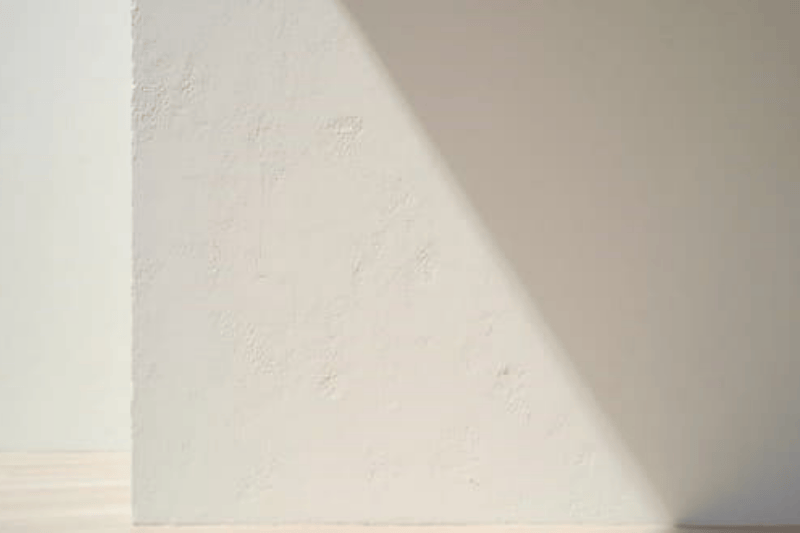
Closely related to breathability is its ability to regulate ambient humidity.
Limescale can absorb and release part of the humidity from the environment progressively, helping to maintain a more stable behavior in indoor spaces.
This does not mean that it replaces good ventilation or that it solves serious humidity problems on its own, but it can contribute to creating more balanced and comfortable environments, especially when combined with compatible supports and suitable construction solutions.
That is why it is valued so much in old homes, renovations and bioconstruction projects.
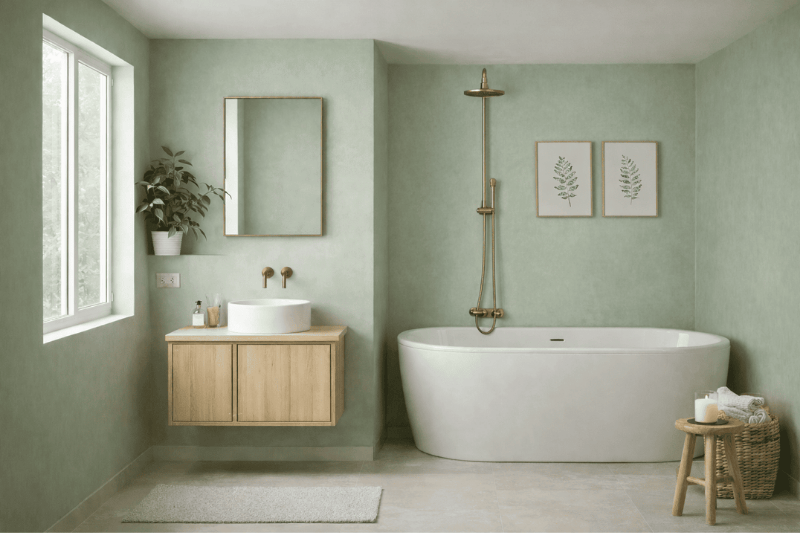
From a decorative point of view, lime has a quality that is difficult to reproduce with industrial paints or coatings: its authentic mineral finish.
Lime surfaces are usually not completely flat or uniform. They feature small variations, visual depth, and a much softer, more organic way of reflecting light.
That character is precisely what makes many interior designers and decorators value it so much. Lime provides:
In contemporary spaces, this naturalness combines particularly well with materials such as wood, linen, stone or ceramics.

Another of the great virtues of lime is its ability to age well.
Unlike some synthetic materials, which over time can peel, crack aggressively or show unharmonious deterioration, lime usually acquires a natural patina that is part of its beauty.
In many traditional architectures, the passage of time is not perceived as a defect, but as just another aesthetic quality. This way of aging, more alive and organic, is one of the reasons why lime is still so appreciated in restoration and in projects with material sensitivity.
When formulated and applied correctly, it can also offer long durability, both indoors and outdoors.

Traditionally, lime has also been valued for its bactericidal, antiseptic and fungicidal properties.
That is why it was used for centuries in whitewashing of houses, stables, patios and spaces where hygiene was especially important.
Although today the construction and health context is very different, this quality is still part of its interest as a natural material for cladding.
In combination with its breathability and its behavior against moisture, this property reinforces the idea of lime as a suitable material to create healthier indoor environments.
Lime also has a great advantage over other more rigid or waterproof materials: its compatibility with traditional substrates.
It works especially well with materials such as:
That is why it is a highly recommended option in rehabilitation, restoration or homes where you want to respect the natural behavior of the wall.
It also fits very well with the philosophy of ecological and natural materials, as it integrates with more open, breathable and coherent construction systems.
The most interesting thing about lime is that many of its properties respond exactly to very current concerns:
That is why lime does not only belong to the past. It is also part of the present and, most likely, the future of natural decoration and conscious architecture.
If there is one area where lime has regained a very visible prominence in recent years, it is interior decoration.
Although for a long time it was mainly associated with traditional construction or restoration, today lime is fully present in contemporary interior design projects, healthy homes and spaces where more natural, serene and durable finishes are sought.
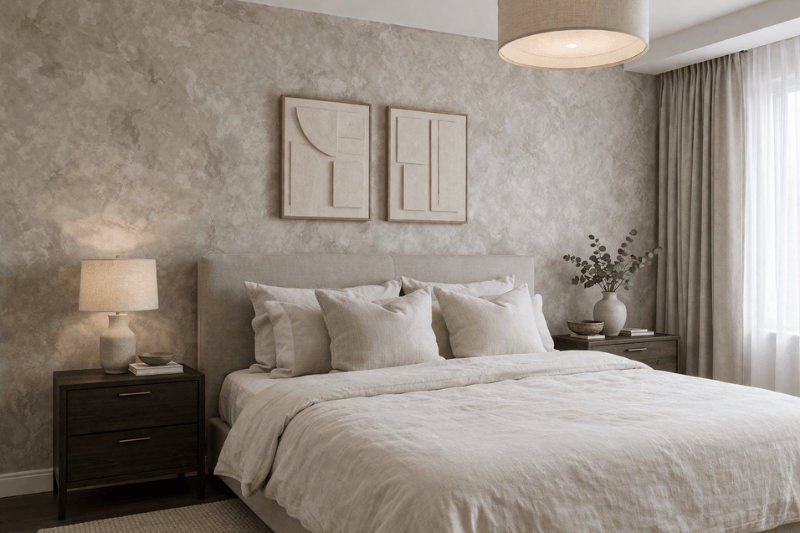
Its attractiveness does not depend only on its mineral origin. Its ability to create surfaces with depth, texture and a very special relationship with light also plays a role. Lime does not offer a “flat” or artificial finish: it provides nuances, movement and a more organic beauty.
That is why it is increasingly used in walls, bathrooms, living rooms, bedrooms or transition spaces, both in rustic environments and in minimalist and modern interiors.
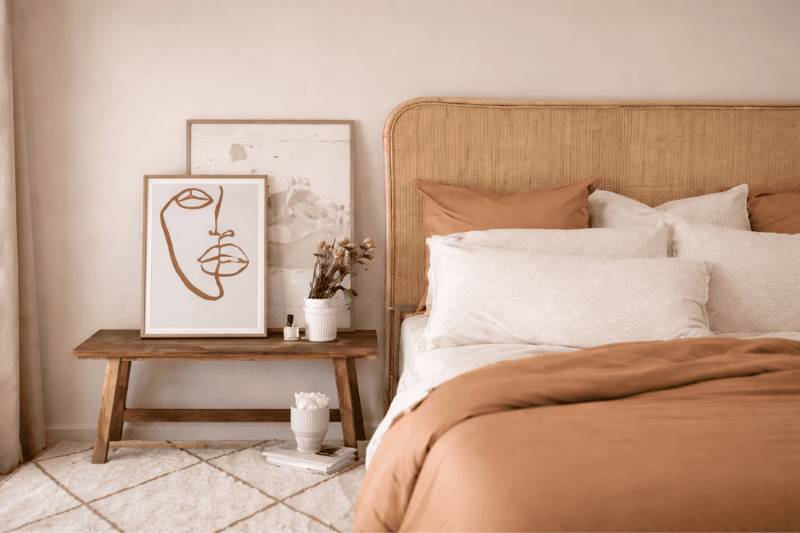
Lime paints are one of the best known and most accessible ways to introduce this material into the interior of a home.
They are used to decorate walls and ceilings with a matte, smooth, mineral finish, very different from the uniform look of many plastic paints. They tend to generate surfaces with slight tonal variations and softer light, something that is highly appreciated in interior design.
Among its main attractions are:
They are particularly suitable for:
Lime stuccoes represent a more elaborate and decorative version of mineral coatings.
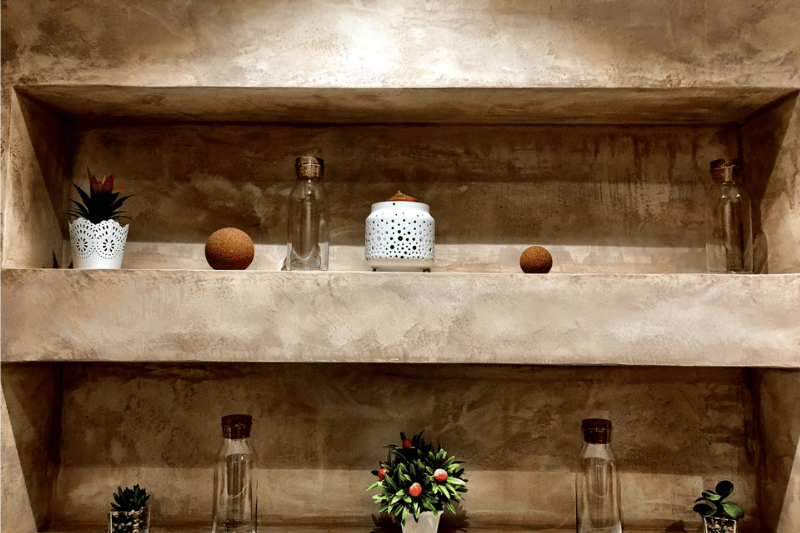
They allow you to achieve surfaces with more visual depth, more richness of nuances and, depending on the technique used, finishes ranging from very matte and silky to slightly polished effects.
They are widely used when looking for a finish with presence, capable of adding character without the need to resort to intense colors or excessive decorative elements.
Lime stuccoes fit very well in:
In addition, they convey a strong feeling of authentic material and craftsmanship, something highly valued in well-kept spaces.
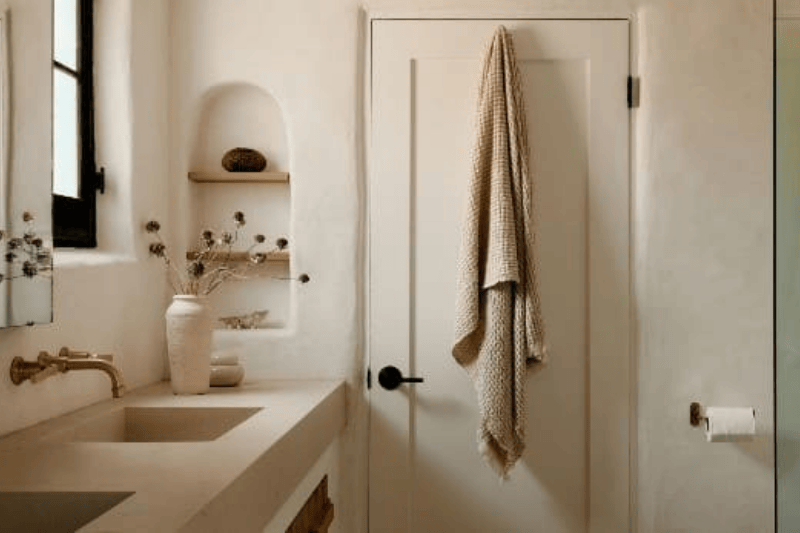
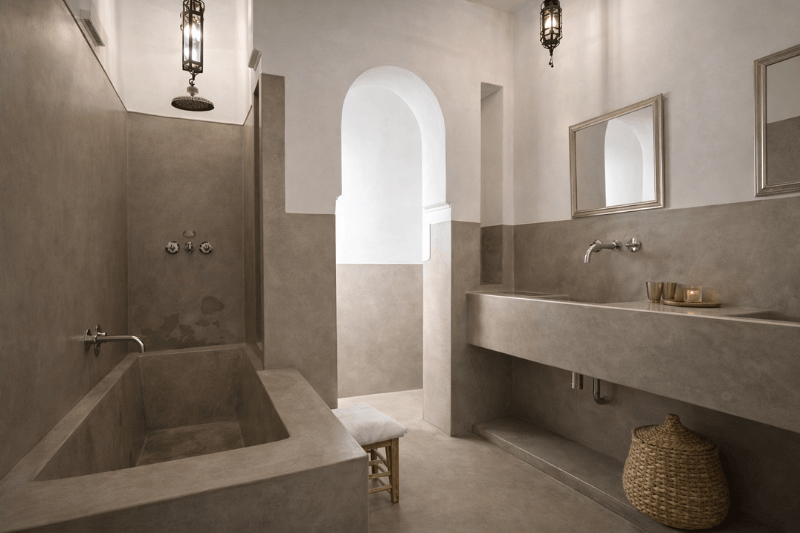
One of the most attractive uses of lime indoors is its application in bathrooms and wet areas, especially through techniques such as tadelakt or other continuous lime-based mineral coatings.
Tadelakt, of Moroccan origin, is probably one of the most recognizable lime finishes. It is characterized by its soft, continuous and slightly satin surface, very suitable for creating bathrooms with an enveloping, warm and artisanal aesthetic.
This type of coating is used in:
Their great attraction is that they allow them to avoid the visual fragmentation of tiles or joints, creating more fluid and sensory spaces.
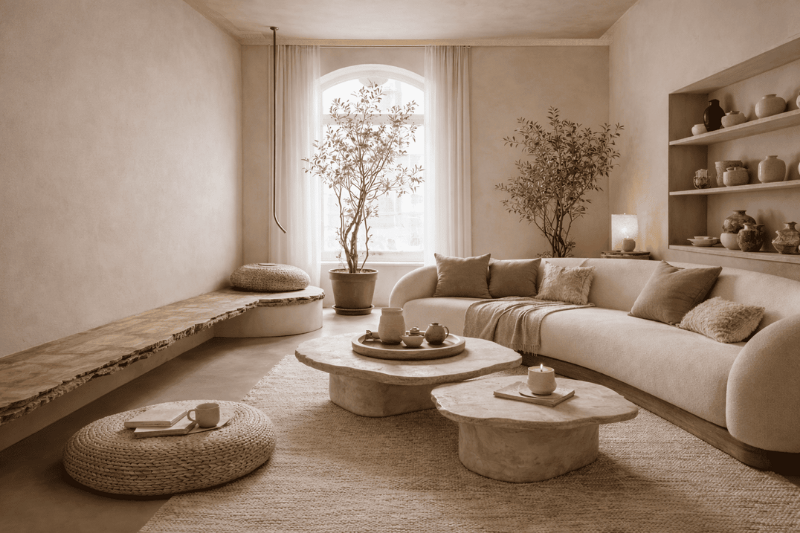
Lime is also present in a new generation of continuous mineral coatings, which reinterpret tradition from a more contemporary aesthetic.
These finishes allow you to create clean, continuous surfaces with a mineral texture, which are in high demand in current projects where a more refined visual language is sought.
They are frequently used in:
They provide a sense of calm, uniformity and material coherence, without sacrificing the natural character of the finish.
For a long time, lime was mainly perceived as a building or rehabilitation material. However, today it has also become a first-class decorative resource.
Interior designers and decorators value it because it allows you to work with the wall as a living surface, with texture and depth, instead of treating it simply as a painted background.
Lime helps to build environments with more personality without the need to overload the space. It works especially well when combined with:
That is why it is so interesting for homes where a natural, timeless and unartificial aesthetic is sought.
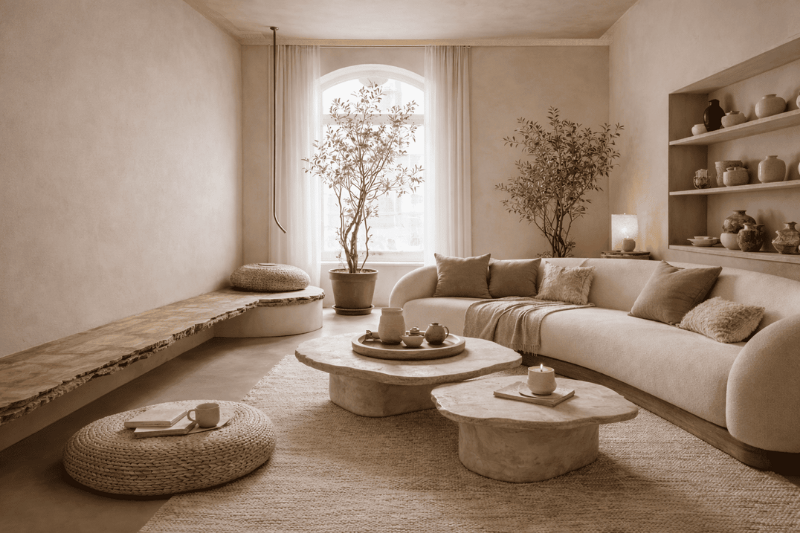
The versatility of lime means that it can be used in very different styles, as long as the colour, texture and material context are worked on well.
It usually works especially well in stylish interiors:
In all these cases, lime has an uncommon ability to bring visual calm and material richness at the same time.
In decoration, lime stands out not only for how it looks, but also for how it feels.
Lime surfaces often convey a different feel than synthetic coatings: they are visually softer, deeper, more honest in their texture and more connected to the material.
That’s why, for many people, using lime indoors isn’t just an aesthetic choice. It is also a way of approaching a more conscious way of inhabiting spaces, with more coherent, durable and pleasant materials.
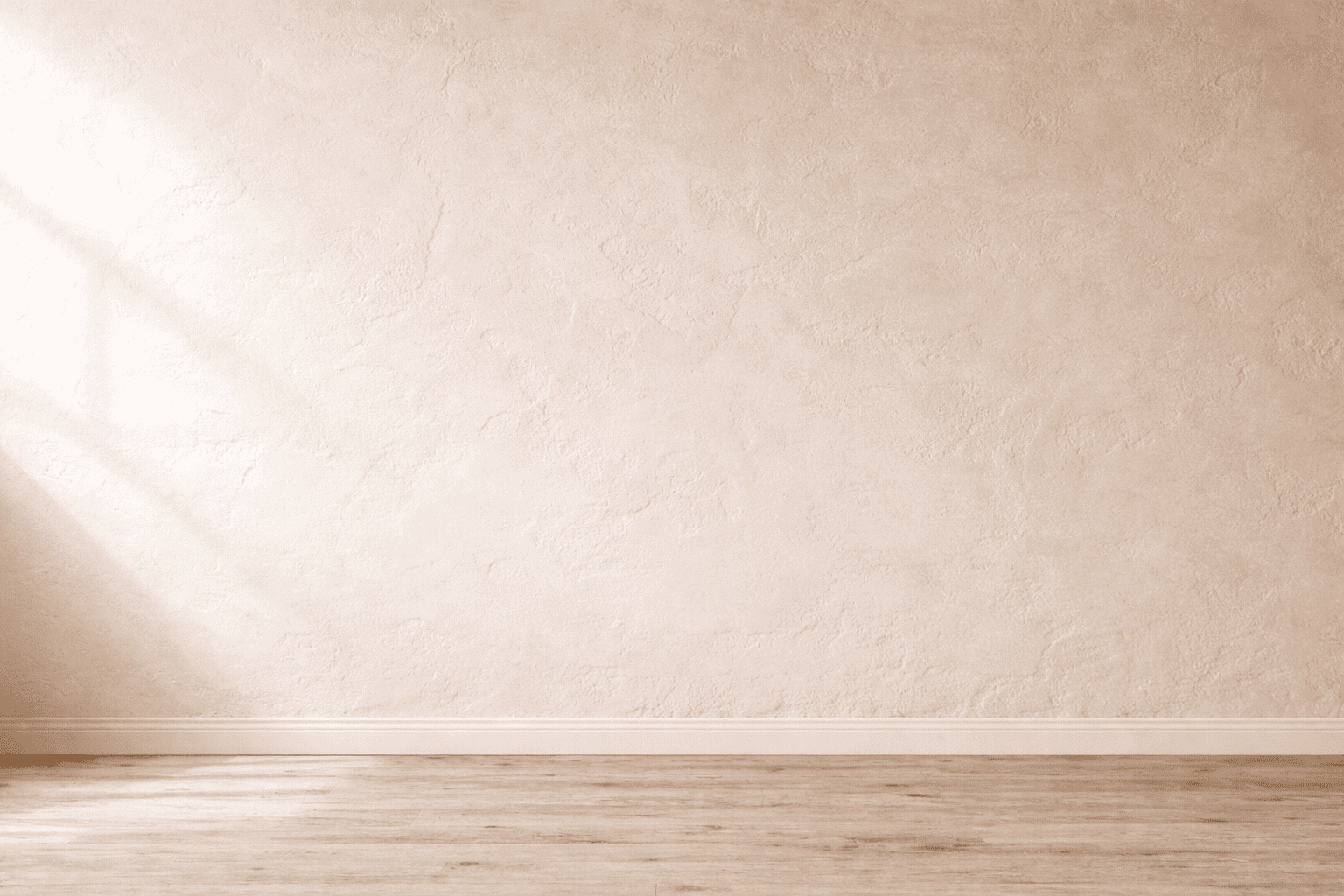
Although in this guide we are paying special attention to decoration and interior finishes, lime is still a very important material in the field of construction.
In fact, many of its current decorative applications are only well understood when we remember that lime has been one of the great materials of traditional architecture for centuries. With it, walls have been erected, mortars have been formulated, facades have been protected and entire buildings have been covered.
Today, its use in construction still makes a lot of sense, especially in rehabilitation, restoration, bioconstruction and projects where greater compatibility with natural materials is sought.
One of the most important uses of lime in construction is the production of lime mortars.
These mortars have historically been used to:
Unlike other stiffer binders, lime mortars tend to offer a behavior that is more compatible with traditional substrates, allowing some flexibility and better moisture management.
That is why they continue to be highly valued in:
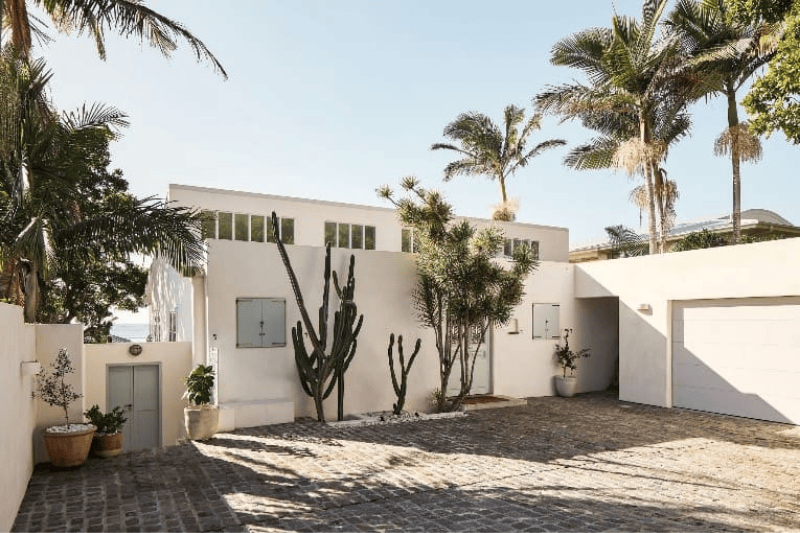
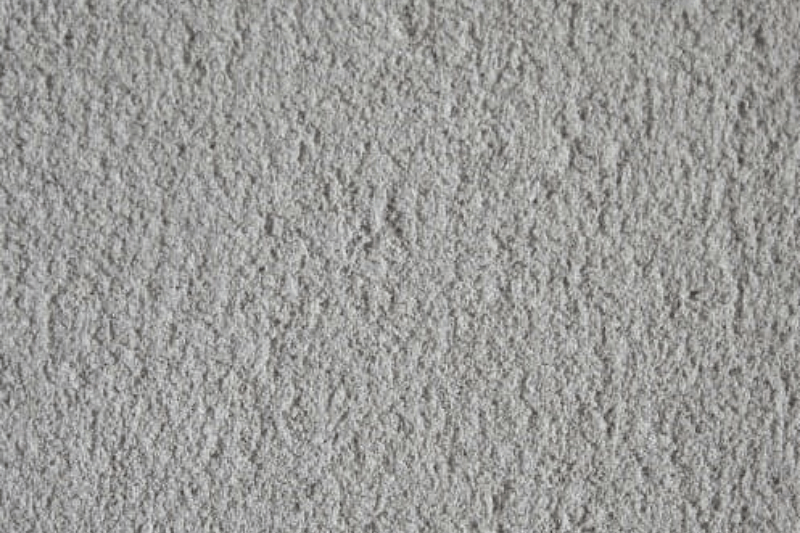
Lime is also widely used in exterior cladding, especially in the form of mineral plasters and renders.
These coatings help protect the wall from the weather, while maintaining good breathability. This combination is especially interesting in buildings that need to evacuate moisture naturally.
On façades, lime allows you to create finishes:
In this type of application, hydraulic lime usually plays an important role due to its better performance outdoors and in humid environments.
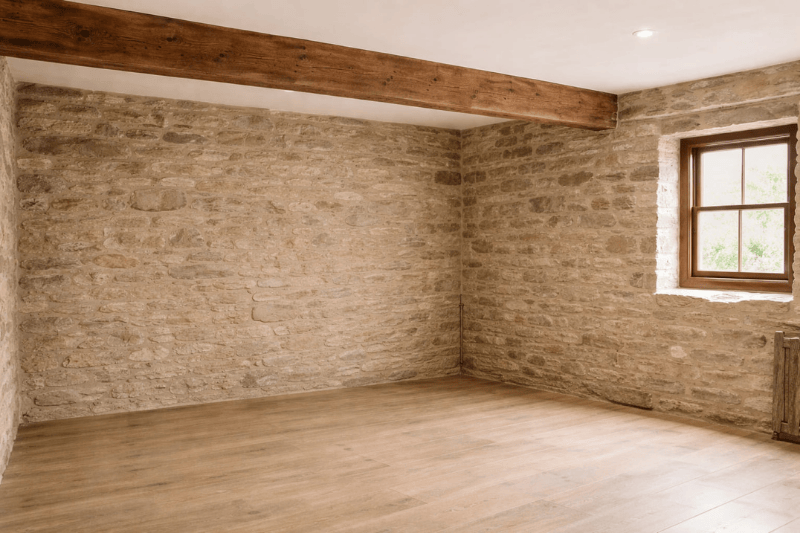
One of the areas where lime is most valuable is the rehabilitation of old buildings.
Many historic buildings were originally built with lime mortars, mineral plasters and porous materials such as stone, solid brick, adobe or rammed earth. In these cases, using materials that are too rigid or impermeable can alter the natural behavior of the building and generate pathologies over time.
Limescale, on the other hand, offers greater compatibility because:
That is why it is a common choice in heritage restoration and respectful rehabilitation.
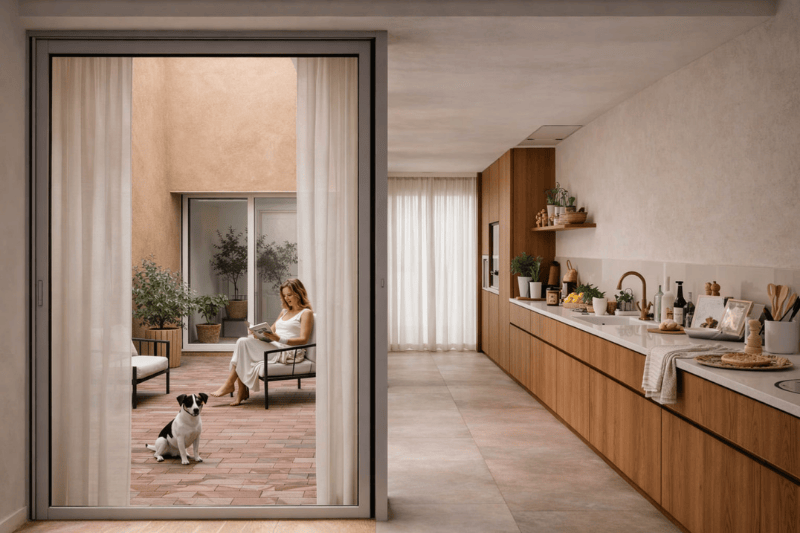
Lime also occupies a prominent place in bio-construction and in healthy architecture projects.
Its mineral origin, breathability and good relationship with other natural materials make it fit very well in construction systems where the following are prioritised:
In combination with wood, cork, plant fibres, clays or other natural materials, lime is part of a way of building that is more conscious and more connected to the real behaviour of buildings.
Lime has accompanied architecture for centuries, and today it reawakens interest for a very simple reason: it still makes a lot of sense.
At a time when we place a higher value on natural materials, healthy interiors and durable finishes, lime represents a way of building and decorating that is more coherent, more honest and more connected to the material.
Whether in paints, stuccoes, coatings or mortars, lime offers a very special combination of mineral beauty, breathability and compatibility with buildings. That is why it continues to be a great option both in rehabilitation and in contemporary decoration.
At RedVerde we believe that recovering materials such as lime is not looking at the past with nostalgia, but moving towards a more conscious way of inhabiting spaces. If you are thinking of using lime in an interior, renovation or natural decoration project, you can explore our selection of ecological lime and plaster or contact us. We will be happy to help you find the most suitable solution according to the type of support, the finish you are looking for and the needs of your project.