Clay coatings

Clay is one of the oldest materials used by humankind. Its eco-friendly qualities, its ability to regulate humidity and its capacity to create comfortable, warm environments make it an ideal coating for interiors. RedVerde clay coatings are available in different textures and natural colours, and are perfect for decorating with character and respect for the environment.

Brands
Brand filter
Categories
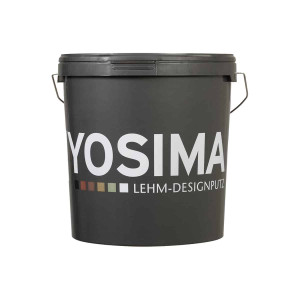
yosima bote bolsa
Building with clay
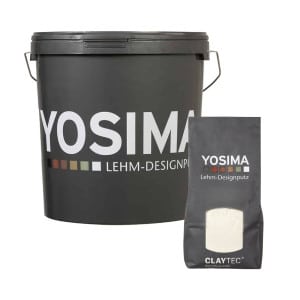
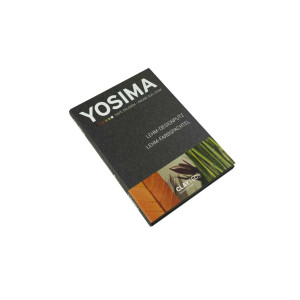
YOSIMA clay design cladding

Price range: 13,31€ through 87,92€ IVA Incluido

VIEW PRODUCT
clayfix bote bolsa
Building with clay
Clayfix clay paint

Price range: 31,76€ through 155,61€ IVA Incluido

VIEW PRODUCT
aglutinante lasur fijador pared 2602 100
Clay coatings
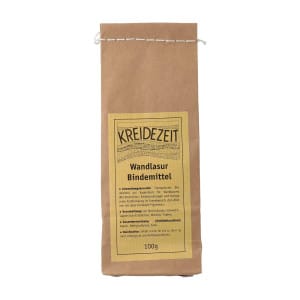
Wall stain binder/fixer 100g

19,72 IVA Incluido

VIEW PRODUCT
emulsion de cera de carnauba
Clay coatings
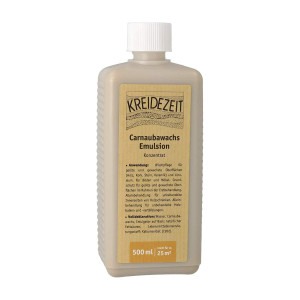
Carnauba wax emulsion 500 ml.

13,24 IVA Incluido

VIEW PRODUCT
Mortero adhesivo de arcilla y refuerzo
Building with clay
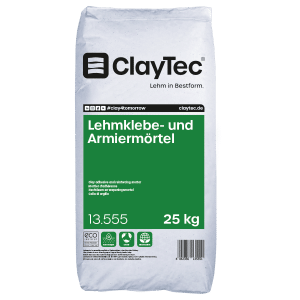
Adhesive clay and reinforcing mortar

42,79 IVA Incluido

VIEW PRODUCT
10.113 lehm oberputz fei 06 sack 1a 64400697 95c1 41e2 bb1e a1e4924e553e
Building with clay
Fine clay finishing plaster 06

31,56 IVA Incluido

OUT OF STOCK
VIEW PRODUCT
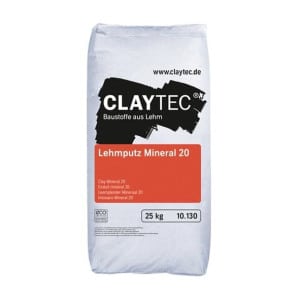
claytec lehmputz mineral 20 25 kg sack
Building with clay
Clay mortar Mineral 20

23,87 IVA Incluido

OUT OF STOCK
VIEW PRODUCT
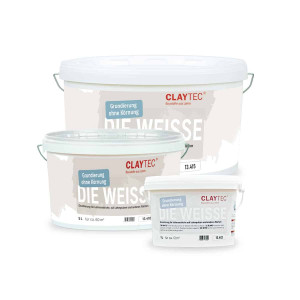
imprimación blanca
Building with clay
White clay primer

Price range: 80,88€ through 140,61€ IVA Incluido

VIEW PRODUCT
imprimación de arcilla amarilla
Building with clay
Yellow clay primer

Price range: 64,71€ through 112,55€ IVA Incluido

VIEW PRODUCT
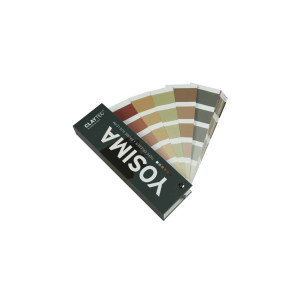
abanico de colores yosima
Clay coatings
YOSIMA Color Fan

54,45 IVA Incluido

VIEW PRODUCT
carpeta de muestras yosima
Clay coatings
YOSIMA Sample Folder

42,35 IVA Incluido

VIEW PRODUCT
Cargando...

Frequently Asked Questions

Clay is a mixture of clay components and sandy components, and can be considered a natural mortar. It is made up of tiny platelet particles; when water is added, they slide over one another and the mixture becomes plastic. When the water dries, the platelets attract one another. The result is a natural strength sufficient for many construction applications. A large proportion of the building materials used each year go towards this purpose, above all in new builds, conversions and modernisation, which is known as building within existing structures.

Clay building materials are used indoors, for example clay bricks and mortar, clay base and finishing renders, and clay
boards. All of these building materials are governed by modern DIN standards. Other areas of application are clay coatings, designer skim coats and clay paints. Load-bearing construction has particularly great potential; the new design standard DIN 18940 covers load-bearing earth block masonry for buildings up to 13 metres tall (four storeys).

  • It is a material with very high thermal inertia and a great capacity to store energy, so “we save energy”.
  • It is a highly hygroscopic material, with the ability to absorb moisture from the air and, in liquid form, transport it and pass it on to another medium.
  • It regulates the ambient humidity of the interior space, thanks to its ability to absorb and release water vapour from the air, preventing the formation of fungi or defects in the substrates.
  • Being a very heavy material, it is a good acoustic material. A great advantage in interior partition walls, preventing noise from neighbouring spaces. The surfaces of clay renders reflect less noise than hard surfaces such as concrete.
  • Being a material with great mass, it is also a good fire-resistant material.
  • Clay shields against high-frequency radiation. Clay earth protects rooms against the high-frequency radiation of mobile phone networks, cordless phones, Wi-Fi, UMTS and GPS far better than other solid wall building materials.

Because they contain no chemical or synthetic components, the walls of the spaces are breathable and antistatic, so we create healthier environments that are in tune with the outdoor environment, preventing the growth of pathogens (fungi, bacteria, germs and dust).

Perfect building biology, a healthy indoor climate.

A good indoor climate is created by balancing breathable surfaces and heat-storing thermal mass. Clay can absorb large amounts of moisture and release it again as it dries, as well as neutralising odours. Its storage mass serves both to protect against heat in summer and to provide comfortable warmth. This is how cosy rooms are created. It also includes good acoustic insulation.

A good indoor climate.

Clay building materials have the property of absorbing water vapour from the ambient air and releasing it again as they dry. This is achieved thanks to the large ""internal surface"" of clay building materials, formed by very fine particles. It also has a filtering effect, which holds back or even neutralises pollutants and odours. The openness of the surfaces (diffusion openness) guarantees access to the internal structure of the skim coat. Open surfaces eliminate the risk of mould forming. Clay building materials counteract the drying out of the airways and thereby reduce the risk of viral infections, helping with many respiratory allergies.

Thermal insulation in summer.

A pleasantly balanced indoor climate at any time of year: heavy clay building materials act as a thermal store, cooling the interior when outdoor temperatures are high in summer. This aspect has become increasingly important in recent years. Even in winter, the storage masses guarantee thermal balance and counteract temperature fluctuations. Unlike air conditioning systems, earthen building components work on a ""low-tech"" principle. Their function requires neither energy input nor maintenance costs and has no time limit. Moisture absorption and thermal storage are the two most important properties that shape the famous ""earth room climate"".

Good acoustics.

Acoustics are also crucial to the sense of wellbeing indoors. Walls and ceilings with poor acoustic insulation let annoying noise through from neighbouring rooms, while hard surfaces increase the volume within a room. With clay building boards, drywall partitions with very good acoustic insulation can be built using simple constructions. Depending on the design, the surfaces of clay renders reflect less noise than hard surfaces such as concrete.

Provided the children are over 10 years old they can help with the application; with younger children there is the danger of them putting their hands in their mouths, and natural paints are not edible.

No, they cannot be applied to textiles, they are made for use in construction. They are decorative wall paints.

Natural paints are safe to apply, both for the applicator and for the people in the spaces, such as children, the elderly, people with respiratory problems and those allergic to volatile chemical substances (VOCs).

Yes, natural paints can be applied over old paints, provided the surface is somewhat absorbent. Only where the paints are latex or very glossy should they not be applied directly, because they would fail to adhere to the substrate. In that case we will need a bonding bridge to the substrate.

Clay can also be painted with lime paint, silicate paint, casein paint and so on. With any natural paint that preserves the properties of the clay, such as breathability and freedom from toxins, in order to maintain a healthy living model. It is not advisable to paint with latex or very glossy paints with a high content of synthetic, acrylic resins, since these will seal the surface, losing breathability, humidity regulation in the interior space and the thermal mass that stores energy.

Yes, clay can be applied in bathrooms; with a natural wax finish we will protect the clay from water splashes. What is not possible is applying clay inside the shower cubicle, that is, "where the water flows"; here we recommend a natural stone as the natural product: marble, granite, travertine and so on.

Yes, clay and lime are two materials that have always gone hand in hand in traditional construction and are highly compatible. And a lime plaster, as a high-end decorative finish, is a very good choice.

We can create high-quality bathroom decoration with traditional lime plasters, finished with natural soaps and waxes. Luxurious bathroom spaces where we can relax in a healthy environment.

Clay is an ideal material in kitchens; it will regulate excess water vapour in the air, reducing odours and creating welcoming kitchens. We can improve washability by using natural waxes as a finish. Combinations with lime plasters are an excellent choice for decorating the surfaces above kitchen worktops. The kitchen will be a meeting point for sharing moments with family and friends and enjoying a healthy shared space.

There are different types of wax; we must always check that they are natural waxes without thinners, for example turpentine and solvents. They are usually natural waxes with various contents such as beeswax, carnauba wax, safflower oil, tung oil and so on. With endless decorative options, combining different design finishes in bathrooms, kitchens, hotels, spas, beauty salons, care homes, schools and more.

Yes, a mark on the wall can be removed with a slightly damp cloth, but not with too much water. Clay is a reusable material, which means that if we dampen it again it can be used once more. Clay is always water soluble because it is entirely natural, extracted from nature with no chemical process or high-temperature treatment, as is the case with lime, gypsum, cement and so on. It is an eco-friendly material that leaves the smallest carbon footprint in its manufacture and over time. Because if in 100 years that building has to be demolished, the clay can be reused, or leave the minimum carbon footprint for our descendants. Leave a legacy on the planet!

Talk to our advisor

You can arrange a 15-minute meeting to speak with our dedicated advisor.

Contact us