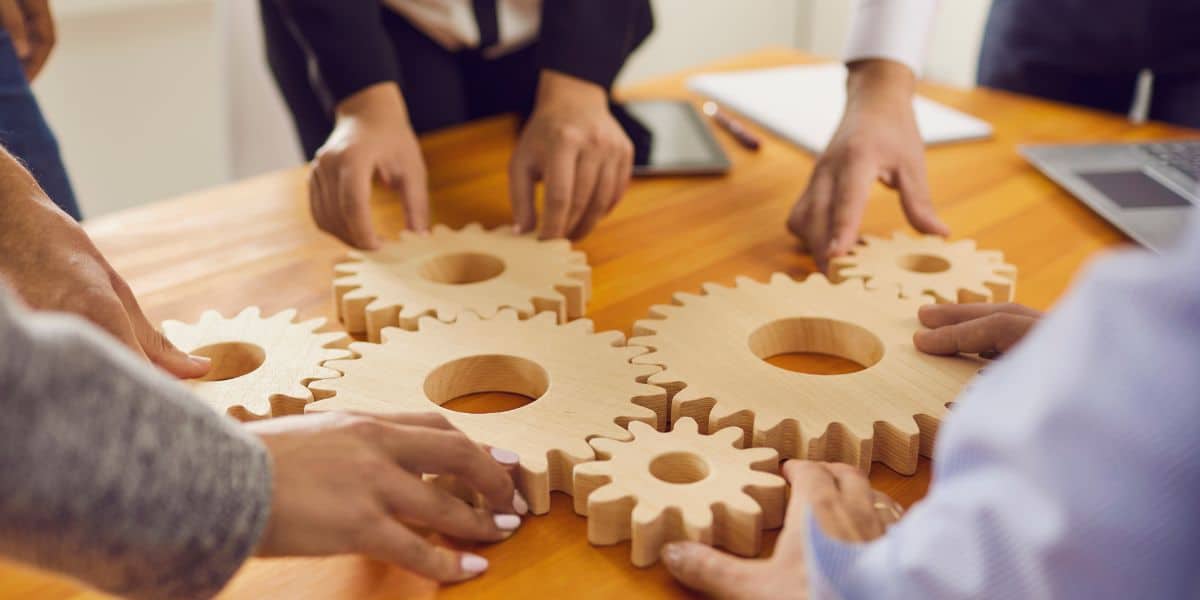
In the sustainable construction sector, experience has shown us that no single player can bring about change alone. As a professional involved in this field for decades, I have seen how collaboration between companies has become a fundamental pillar for optimising resources, sharing knowledge and accelerating the transition towards greener construction models. This vision, which we share at RedVerde, emphasises networking and synergies as drivers of innovation in green building, the bioeconomy and sustainable development.
Innovation in biocomposites through inter-company cooperation
At RedVerde we have found that collaborating with other companies and organisations multiplies our capabilities. A clear example is the incorporation of advanced concepts into our projects, which has led us to build ties with many other companies in the sector, especially in industrialised and modular timber-frame construction. These strategic alliances allow us to combine strengths: manufacturers of eco-friendly materials, designers, builder-developers and even tech start-ups bring their experience together to achieve solutions that no company could reach on its own. In this way, resources are optimised and joint innovations are generated. For example, through our waste revalorisation initiative, we develop biocomposites using underused or unused natural remnants and waste as raw material, demonstrating that cooperation can turn waste into high-tech sustainable materials. This kind of industrial symbiosis is possible thanks to the connection between different sectors of the bioeconomy, where the by-products of some are used as resources for others, increasing overall efficiency and reducing waste.
The exchange of knowledge: key to advancing towards sustainable models
The exchange of knowledge is another central benefit of business cooperation. For more than twenty years, at RedVerde we have taken part in numerous training and outreach activities alongside regional and national associations, promoting the use of age-old materials such as lime and traditional techniques such as earth building, always with an innovative outlook. These collaborative activities —workshops, technical events, forums— allow professionals and companies to learn from one another, update ancestral techniques with modern technologies and spread best practices in green building. The transfer of knowledge flows in both directions: we incorporate international advances and, in turn, share within the network our own experience applied in local projects. In this way, the transition towards more sustainable models is accelerated, because innovations are adopted and adapted more quickly when there is an open exchange between colleagues in the sector. It is no coincidence that sustainable construction is already considered a necessity, one that requires the collaboration of all sectors to achieve goals such as progressive decarbonisation and climate neutrality by 2050. This consensus underlines that only by joining the efforts of companies, professionals, research centres and public administrations will we truly be able to transform the way we build.
Collaborative networks and platforms as drivers of eco-friendly construction
In practice, cooperation takes shape through collaborative networks and platforms. A recent example is the inclusion of RedVerde in Club Madera, an initiative driven by Cesefor that brings together dozens of leading companies around construction with industrialised timber and bio-based materials. By joining this community, we become part of an ecosystem where each participant contributes their specialism: from sustainable forest management to architectural design and industrialised manufacturing. This network fosters construction excellence through the continuous exchange of experience and the coordination of common, complementary standards, promoting the use of timber as a sustainable structural material for the future. Initiatives like this also create concrete opportunities to collaborate: only recently, on 26 and 27 March the first Speed Networking Meeting will take place, an event where companies, institutions and sector professionals will come together with the aim of finding partners and creating synergies to carry out their projects. Meeting spaces like this are essential for forging alliances, connecting needs with solutions and shaping joint projects that drive innovation in the sector.
Public-private collaboration in the sustainable development of construction
In the same way, collaboration extends beyond the business circle and involves public administrations and civil society, especially in the field of the bioeconomy and sustainable development. A notable example of this is BioAction Social Málaga, an initiative promoted by the Málaga Provincial Council to identify the potential of circular bioeconomy resources in the province. In this forum, where we had the pleasure of taking part, it was highlighted that integrating local added value into the production chain is both a challenge and a priority. In other words, to make use of our forests, farmland and organic waste in favour of the green economy, it is essential that local companies, institutions and professionals work hand in hand. Only public-private coordination can fully unlock that potential: administrations provide strategic vision, institutional support and facilitate connections, while companies bring innovation, investment and delivery capacity. The result of this multilateral collaboration is action plans and pilot projects that address challenges as diverse as sustainable forest management, the production of biomaterials, energy efficiency in buildings and the circular economy in construction. In this way, by combining appropriate policies with business initiative, we advance towards more innovative, efficient solutions for the future of eco-friendly construction in our region.
The future of eco-friendly construction: synergies that make the difference
In conclusion, from my perspective at RedVerde, business collaboration and networking are not only desirable but absolutely necessary to face the current challenges of the sustainable construction sector. Optimising resources means sharing them and coordinating with one another; improving our knowledge requires teaching one another; and accelerating the green transition means walking together towards the common goal.
Our participation in collaborative platforms such as Club Madera, and our support for local initiatives such as BioAction Social Málaga, reflects this conviction and creates the opportunity for events in the very near future such as MálagaBio, an event that will take place during the month of June, where we will run congresses, talks, professional and institutional meetings, seminars, courses, workshops and competitions side by side in Málaga’s “green building month”.
That is why we firmly believe in the power of synergies to ensure that eco-friendly construction stops being an alternative niche and becomes the norm. Every alliance forged, every piece of knowledge shared and every resource optimised through cooperation brings us one step closer to buildings that are healthy, efficient and respectful of our health and that of the planet.