
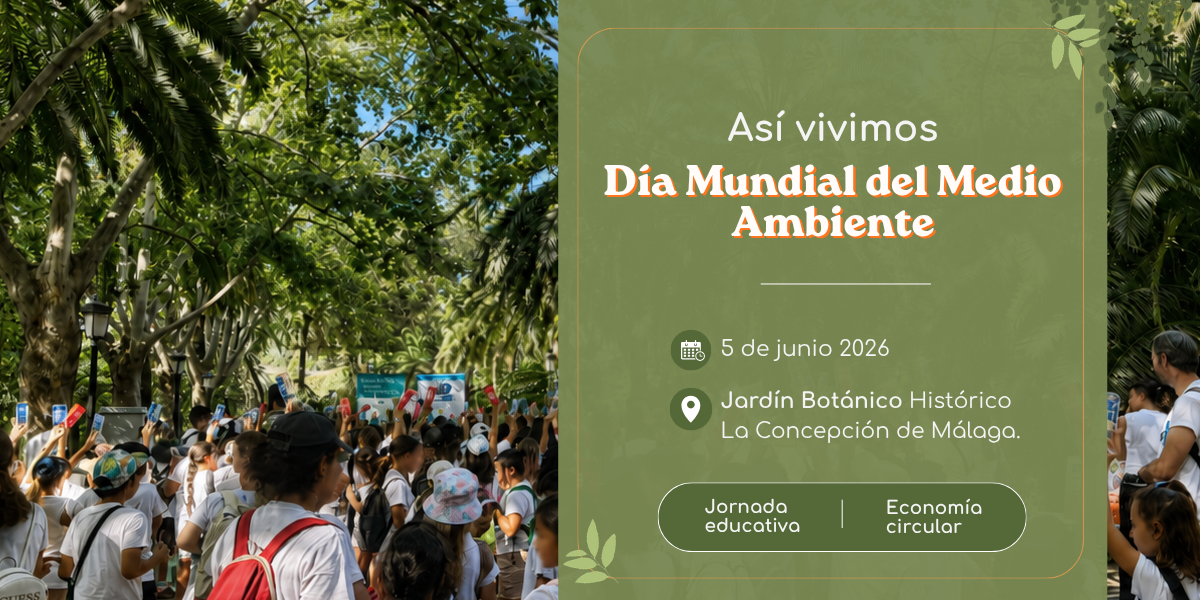
The Malaga City Council, through the Environmental Sustainability Area, joined the celebration of World Environment Day, which is commemorated every June 5, with a program of educational and participatory activities developed in the La Concepción Historical Botanical Garden.
In this context, RedVerde participated together with FumiHogar in an educational day aimed at schoolchildren from different centers of the city, within the environmental education program Green Passport. The meeting aimed to bring sustainability, the circular economy and the importance of waste recovery closer to the younger generations in a practical, visual and participatory way.
From RedVerde we are part of one of the workshop stands, where we present different materials and products linked to bioconstruction, the reuse of resources and the circular economy. The main idea was simple, but very important: to help children understand that a lot of waste that apparently has no value can become new raw materials if we learn to look at it in a different way.
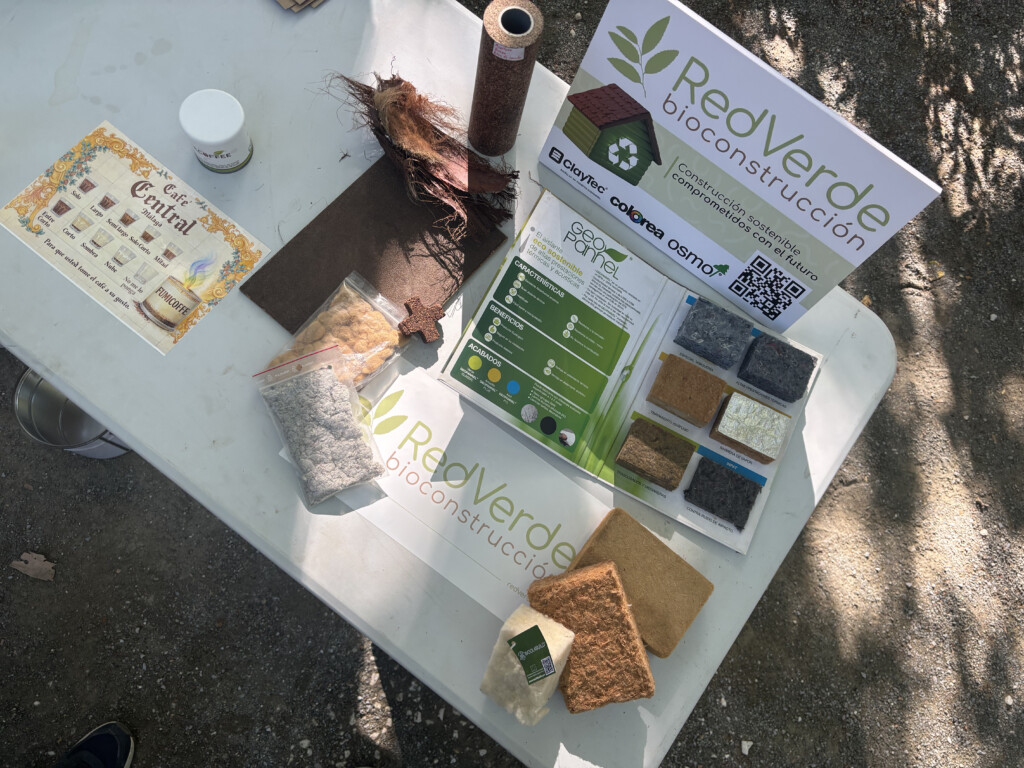
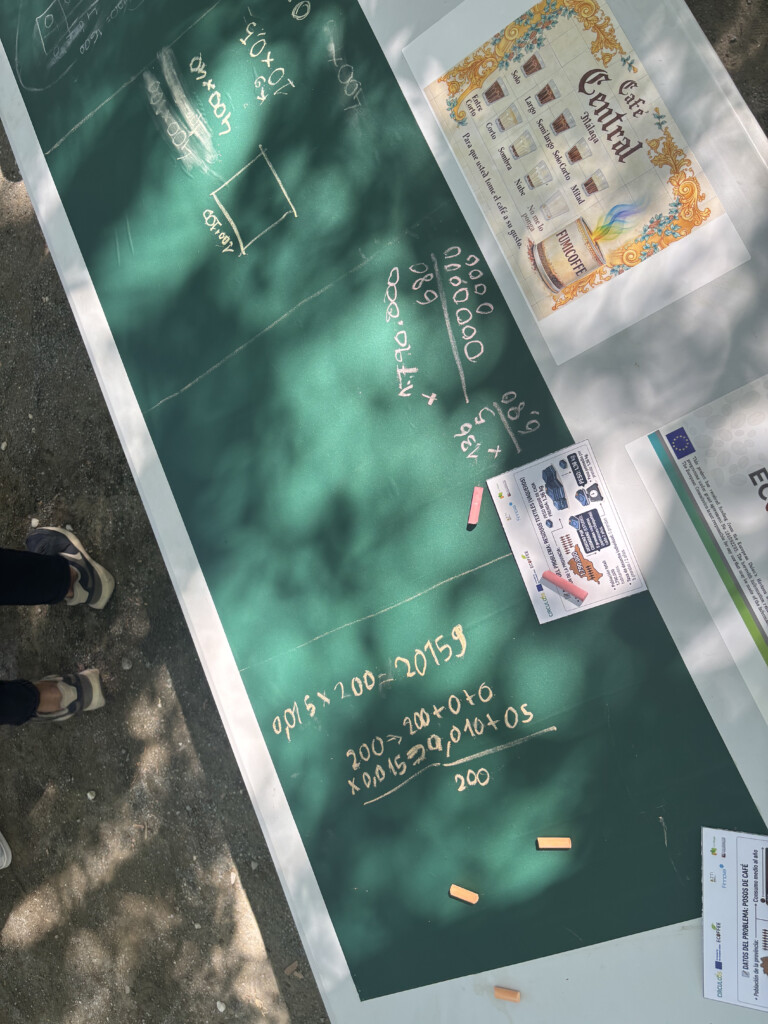
The activity was planned as a three-station pedagogical circuit, in which the students solved small challenges related to everyday waste and its possible forms of recovery.
In the first station, dedicated to waste calculation, the schoolchildren worked with mathematical problems based on individual consumption to understand how small daily gestures can generate large amounts of waste on a global scale. Examples treated included waste such as coffee grounds, textile waste, electronic waste and pruning waste.
The second station focused on the scale of hazard. In it, the students analyzed the environmental impact of different types of waste and classified them according to their level of risk to the planet. This part of the workshop allowed us to reflect on the importance of reducing, separating and correctly managing waste, especially those that can have a greater impact on the environment.
Finally, at the third station, dedicated to the circular economy and recovery, participants connected each waste with possible solutions to transform it into a new resource. This was one of the most interesting parts of the activity, as it allowed us to explain in a visual and understandable way how some materials can return to the production cycle instead of ending up as waste.
At RedVerde we wanted to convey a key idea: the circular economy is not only about recycling, but about rethinking the value of materials from the source.
In the field of bioconstruction, there are more and more solutions that take advantage of natural resources, agricultural by-products or organic waste to manufacture new materials with real applications in architecture, furniture, decoration or sustainable construction.
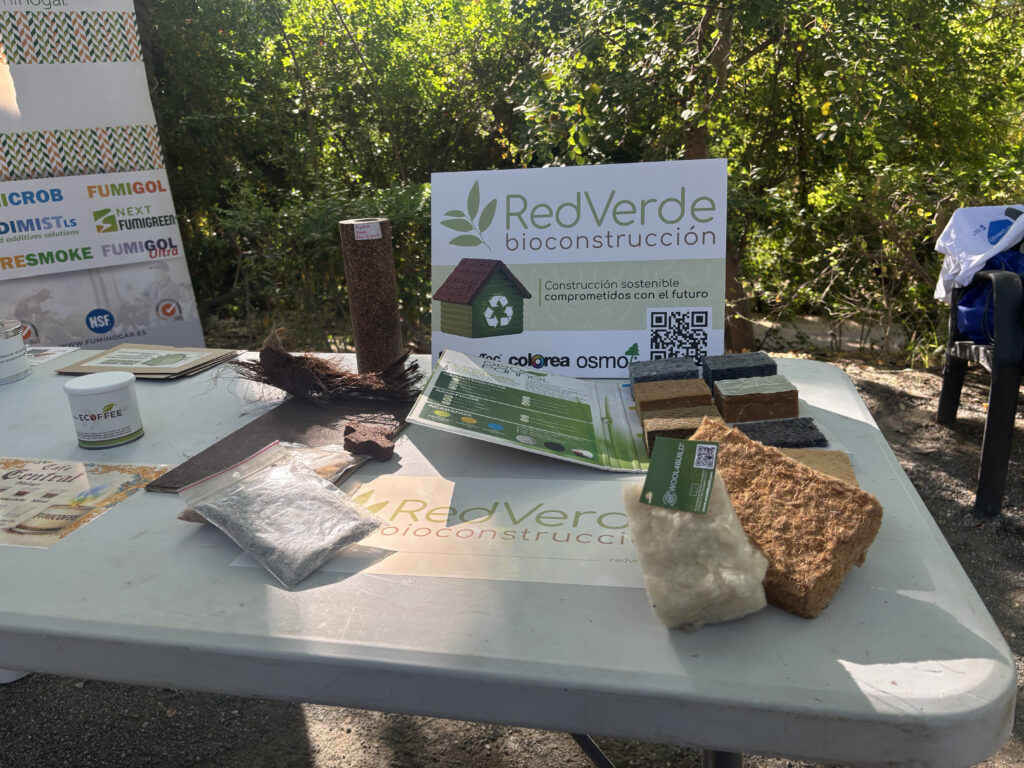
Pruning waste, vegetable fibres, composting, olive pits or by-products from agriculture can become useful components for developing new products, panels, finishes, furniture or even construction solutions. Materials that were previously considered waste can become part of healthier, more efficient and environmentally friendly buildings.
This idea connects directly with RedVerde’s philosophy: to bet on natural, sustainable materials that are consistent with a more responsible way of building.
During the day, FumiHogar also presented its ECOFFEE project, a European initiative that works on the valorization of coffee grounds to transform them into natural and sustainable biocides.
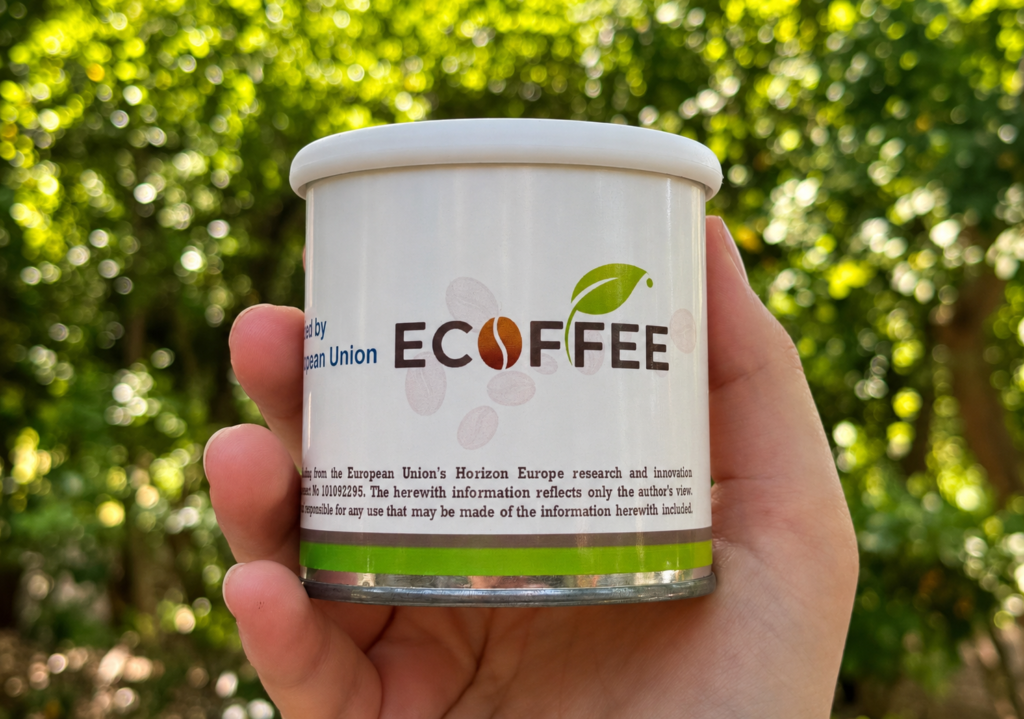
This example was especially interesting for schoolchildren because it is based on a very everyday waste: the coffee we consume every day. Through innovation, research and the circular economy, a seemingly simple waste can be turned into a raw material with new value applications.
Projects like ECOFFEE help show that sustainability is not an abstract idea, but something that can be applied to real products, industrial processes, and concrete solutions to reduce environmental impact.
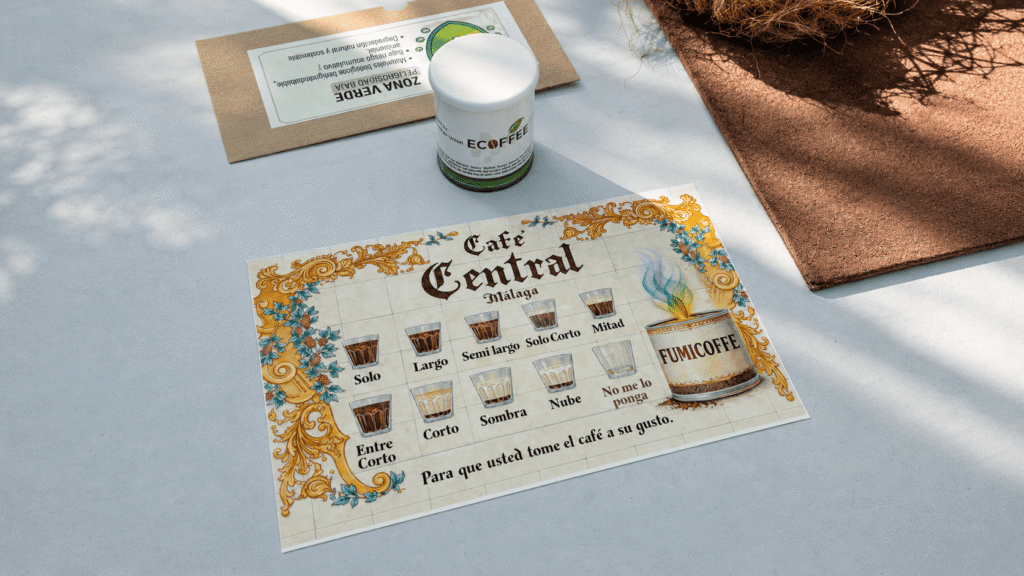
For RedVerde, participating in this type of initiative is a way of bringing bioconstruction and sustainability closer to society from the grassroots: education.
The children not only learned concepts such as waste, recovery or circular economy, but they were also able to touch them, relate them to real examples and understand that the materials that surround us have a history, an origin and also a possible second life.
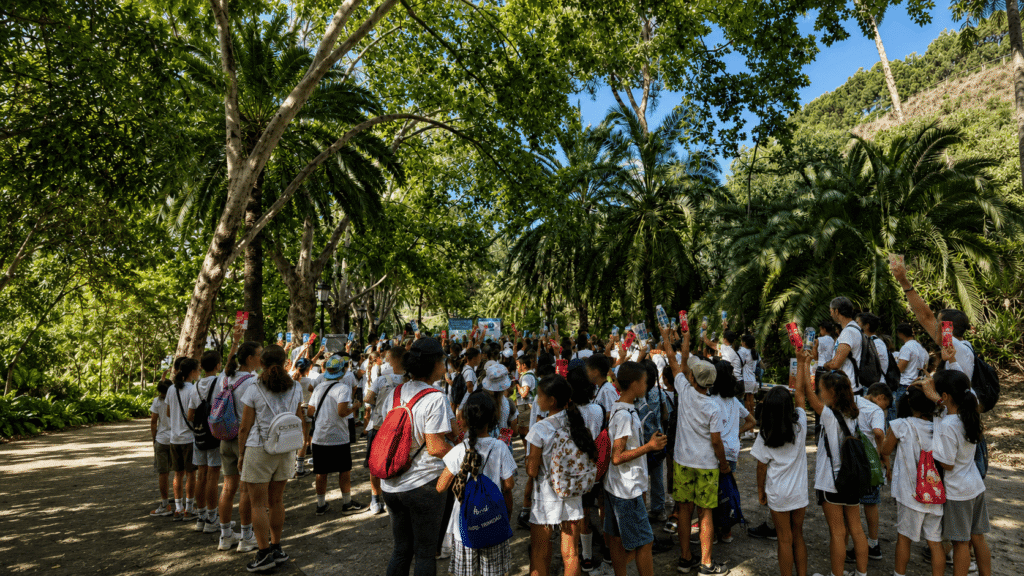
From RedVerde we would like to thank FumiHogar for the opportunity to share this dissemination space, as well as the Malaga City Council and the Environmental Sustainability Area for promoting a program of activities that brings environmental education closer to young people in an environment as special as the La Concepción Historical Botanical Garden.
Bringing the circular economy closer to the little ones is to sow awareness for the future. Because materials matter; and the way we use, reuse and transform them as well.