

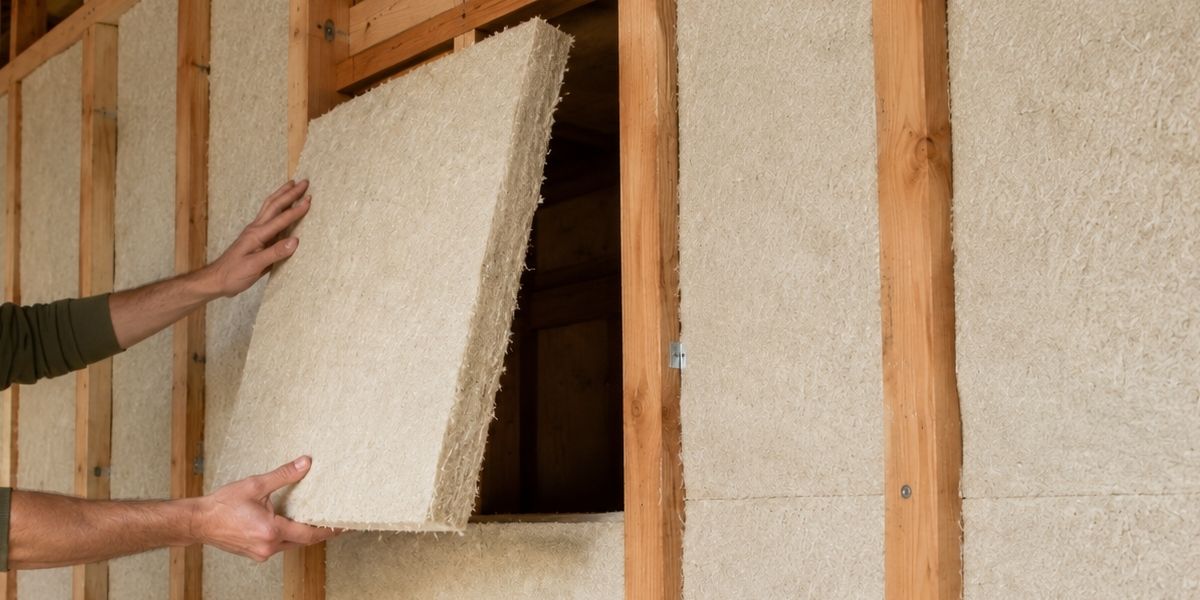
Hemp has gone from being a raw material associated with the textile or agricultural world to becoming a material that is increasingly present in sustainable construction.
In bioconstruction, hemp insulation is valued for its natural origin, its good thermal and acoustic behaviour, and its compatibility with breathable construction systems. It can be used both in new construction and in rehabilitation, provided that it is chosen correctly and integrated into a suitable system.
Because, as with any material, it is not enough that it is natural. For it to work well, it must be adapted to the type of building, the support, the existing humidity and the objective of the intervention.
In this guide, we look at what hemp insulation is, where it can be used, and what to consider before choosing it.
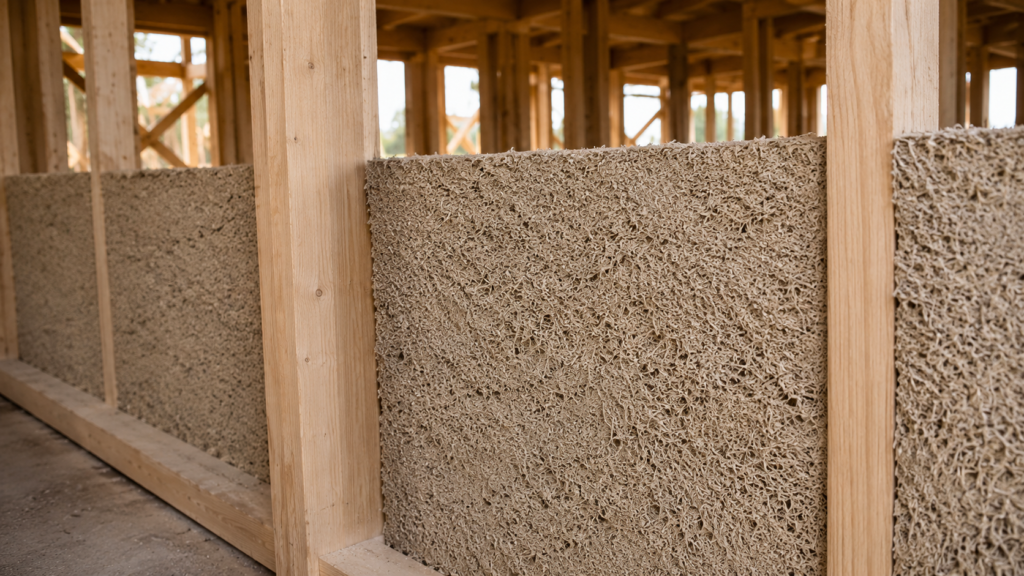
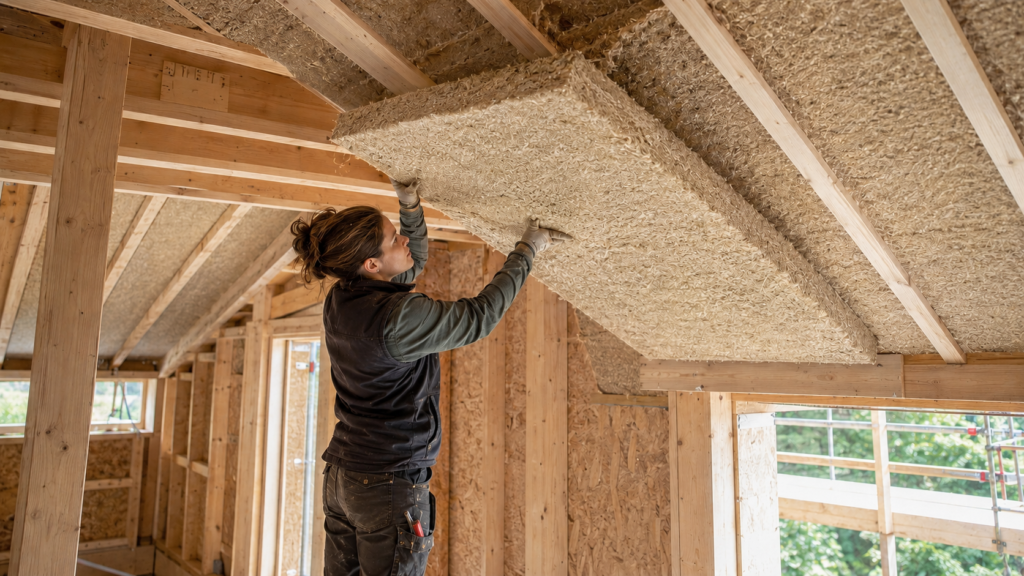
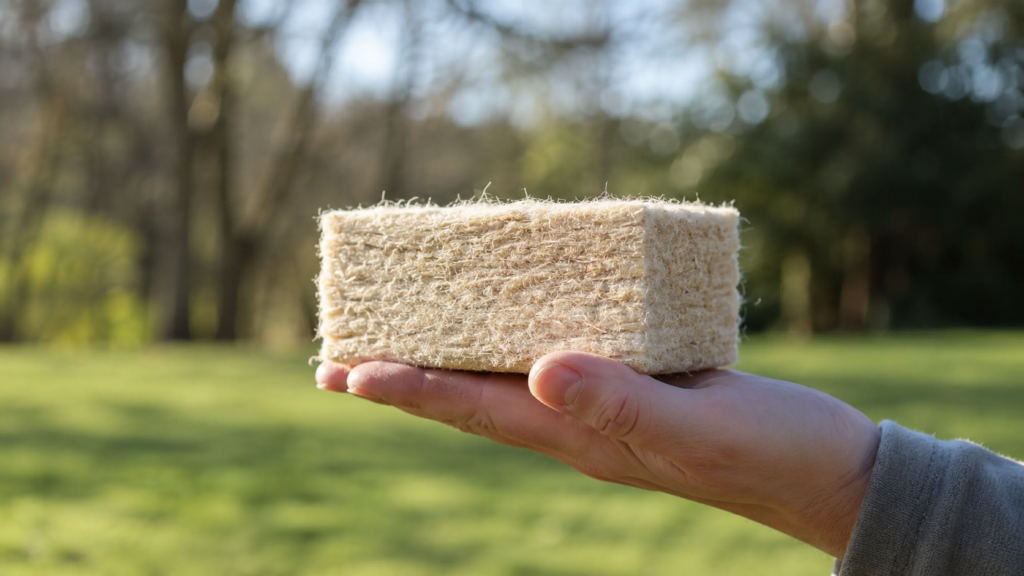
Hemp insulation is a natural material made from industrial hemp fibers. These fibers are transformed into panels, blankets or rolls that can be placed in different parts of the building, such as walls, roofs, ceilings, floors or wooden frames.
Its main function is to contribute to interior comfort, helping to improve the thermal and acoustic behaviour of the home or building.
There are also construction solutions based on hemp and lime, such as blocks, fillings or enclosures. Although they are not exactly the same as hemp fiber insulation, they share the same idea: to use natural, breathable materials that are compatible with a healthier construction.
Therefore, when we talk about hemp under construction, it is worth differentiating between:
Hemp fiber insulation:
It is typically used in the form of panels, blankets or rolls. It is common in roofs, partitions, cladding, floors or light structures.
Hemp and lime solutions:
They are used in enclosures, blocks or construction systems where hemp is part of the wall as a whole.
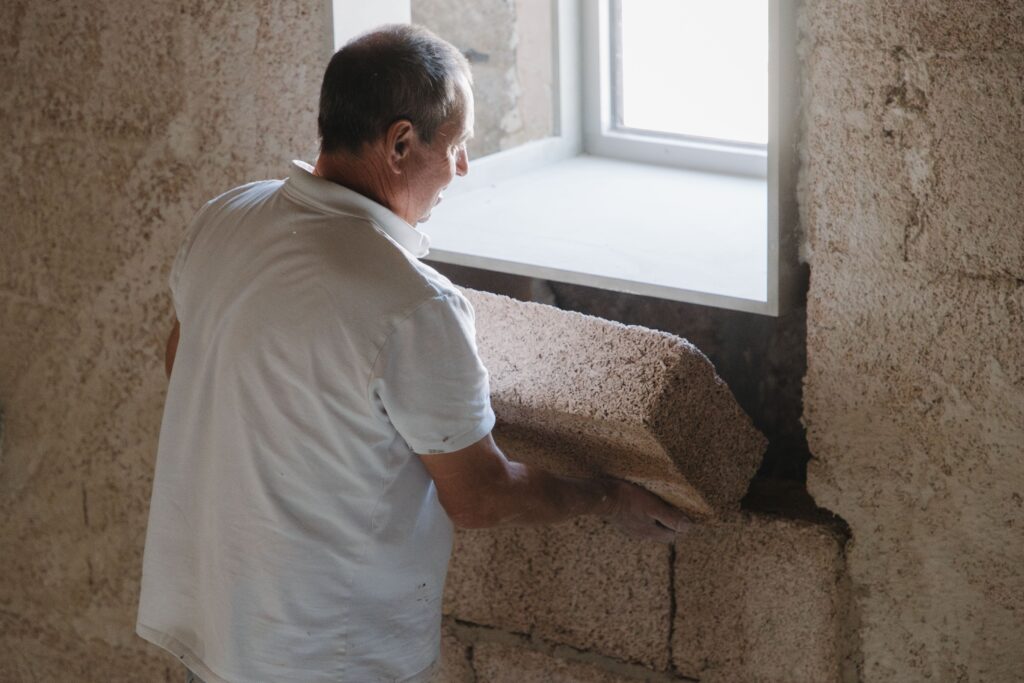
Within these hemp and lime solutions we find Cânhamor’s ECOblocks, a construction alternative made up of hemp and lime that allows enclosures to be built with a natural, bio-based and carbon-negative material.
Unlike hemp fibre insulation in panel or roll, ECOblocks are part of the wall’s own construction system, providing interior comfort, natural humidity regulation and a reduction in layers compared to conventional solutions.
At RedVerde we are official distributors of Cânhamor in Andalusia and we can advise you if you are considering incorporating them into a new build, renovation or healthy construction project.
The interest of hemp in construction is not only in the fact that it is a natural material. It also stands out for its behavior inside the building.
Hemp insulation helps to improve interior thermal comfort. In winter it can help to reduce heat loss and in summer it helps to delay the entry of external heat, especially when combined with a well-designed construction system.
This makes it an interesting option for homes where a more stable and pleasant indoor temperature is sought throughout the year.
Thanks to its fibrous structure, hemp can also help improve the acoustic behavior of interior walls, ceilings, or partitions.
It can be a good option in homes, offices, rural accommodation or spaces where the aim is to reduce noise transmission and improve the feeling of well-being.
Hemp has hygroscopic capacity, that is, it can absorb and release a certain amount of environmental moisture.
This can help balance the behavior of the construction system, as long as it is combined with compatible and breathable materials.
However, it is important to be clear that hemp insulation should not be used to cover up moisture problems. If there are stains, salts, mould, leaks or rising damp, the source of the problem must first be studied and solved correctly.
Hemp fits very well with bio-construction systems where materials such as wood, lime, clay, breathable boards or suitable sheets are used.
The key is not only to choose good insulation, but to design a coherent set of layers that allows good thermal, acoustic and hygrothermal behaviour.
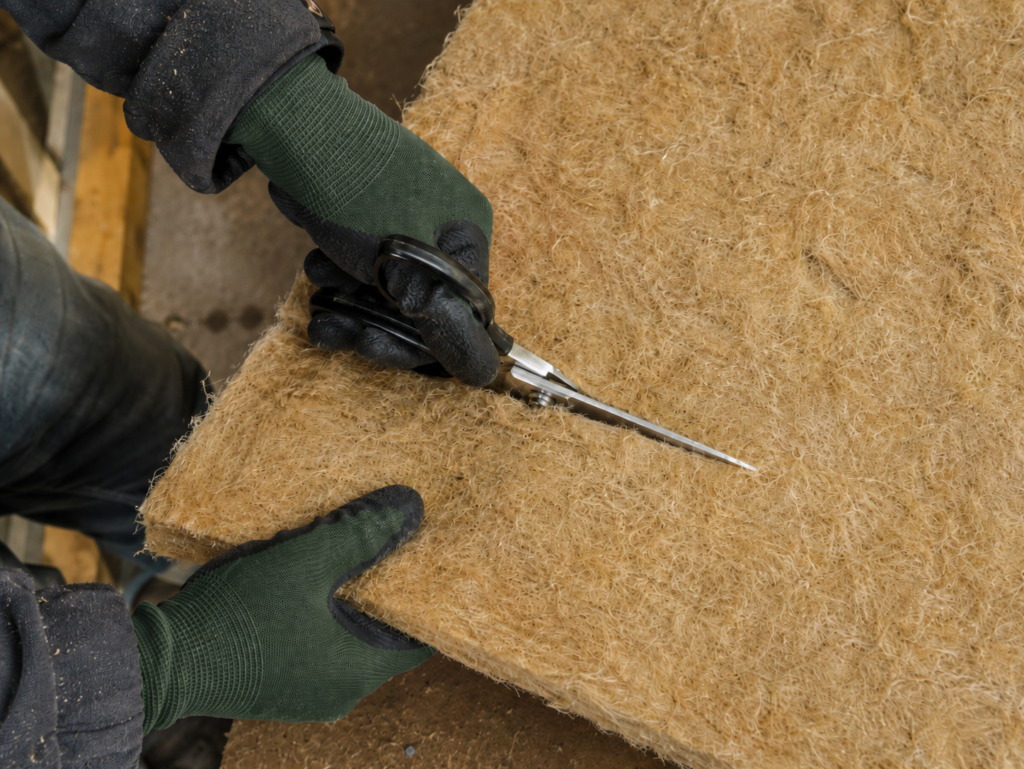
Hemp insulation can be installed in different areas of the building, depending on the format and construction system.
It can be used on:
Walls and cladding, to improve thermal and acoustic comfort.
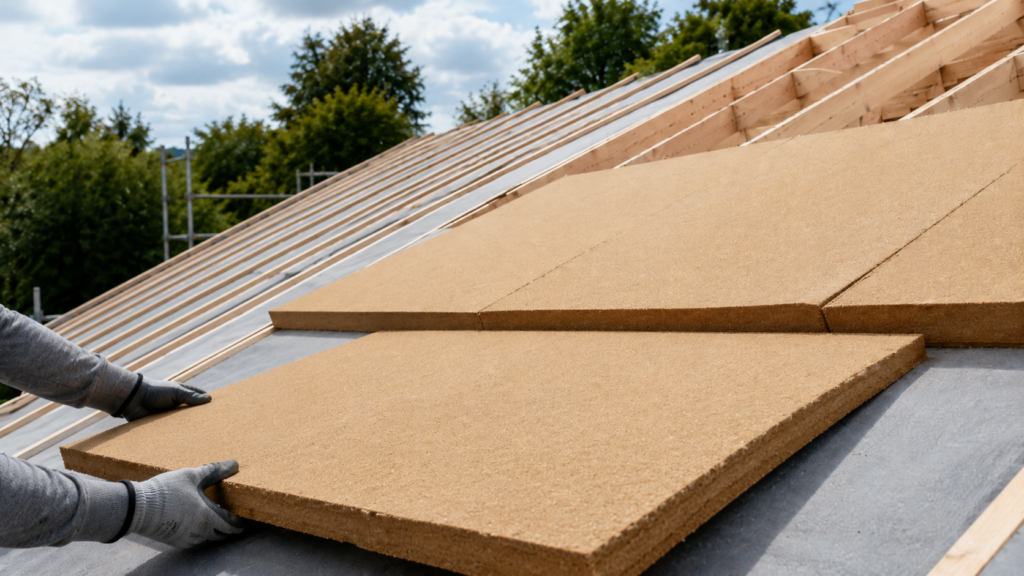
Sloping roofs, especially in wooden structures or light systems.
Ceilings and false ceilings, when the aim is to improve comfort between floors or reduce noise.
Floors and slabs, provided that the system allows it and the loads and humidity are correctly studied.
Wooden frames, where hemp fits especially well due to its flexibility and compatibility with breathable systems.
Rehabilitation of homes, especially when working with bio-construction criteria and looking for a solution compatible with old walls or existing supports.
In any case, before installing it, it is advisable to analyse the support, the climate, the available thickness, the ventilation and the actual use of the building.
Hemp insulation is part of a family of natural materials along with wood fibre, cork, cellulose, sheep’s wool or recycled cotton.
Each has its own advantages.
Wood fibre usually stands out in solutions where good behaviour against heat is sought, especially on roofs.
Cork is resistant, stable and very interesting in areas where durability and good behavior against humidity are required.
Cellulose is widely used in blowing, especially in chambers, roofs or spaces where it needs to be filled continuously.
Sheep’s wool also offers good hygroscopic capacity and can be useful in certain indoor systems.
Hemp, on the other hand, stands out for its plant origin, its thermal and acoustic behaviour, its ability to regulate humidity and its good integration into breathable systems.
It’s not about choosing the “best” material overall, but the most suitable for each project.
Choosing a natural material is a good start, but it does not guarantee a good result on its own. Here are some common mistakes:
Hemp insulation can be an excellent option in many projects, especially when looking to improve interior comfort with natural and breathable materials.
It can be interesting in new homes, renovations, rehabilitation, wood constructions and bioconstruction projects.
Even so, it will not always be the most appropriate solution. In some cases, another natural insulation or a different construction system may be appropriate, depending on the humidity, the thickness available, the type of wall or the necessary performance.
The key is not to choose the material in isolation. A good result depends on the whole.
At RedVerde we work with natural materials for construction, rehabilitation and improvement of interior comfort.
Hemp insulation can be a very interesting option if you are looking for a natural, breathable solution that is consistent with bioconstruction criteria. But before choosing it, it is advisable to study the project: the type of wall, the roof, the humidity, the thickness available, the finishes and the objective of the intervention.
There is no one-size-fits-all solution.
That’s why our approach is to help you understand what your home or project really needs before choosing the material.
If you are considering using hemp, hemp insulation or other natural isolates, at RedVerde we can advise you to find the most suitable option.
Contact us and we will help you choose a solution compatible with your project, your home and your real needs.