

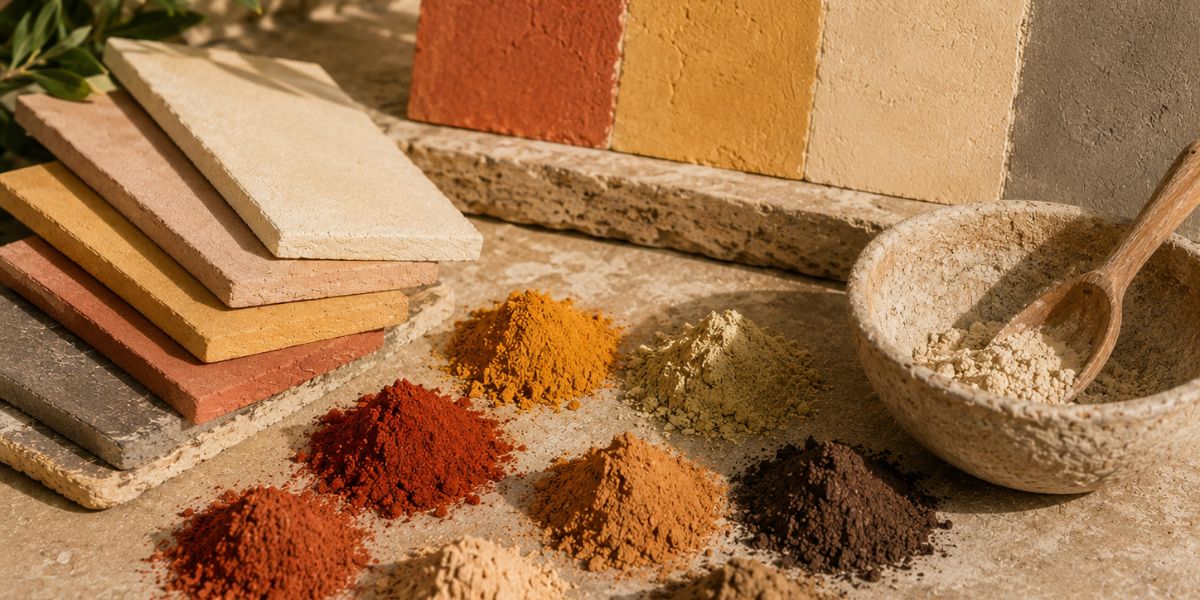
There are colors that simply cover a surface and others that seem to be part of it. That is precisely one of the great differences that natural pigments offer when they are used in mortars, stuccoes, mineral paints and decorative coatings.
In contrast to synthetic dyes or surface finishes that create a separate layer on the substrate, mineral pigments are integrated into the material itself. They not only add colour: they respect the texture, breathability and natural character of the coverings.
For centuries, earth, ochre, sienna, almagras and mineral oxides have been part of traditional architecture. They have been present in façades, plaster, mural paintings, floors, decorative arts and restoration techniques. Today they are once again in the spotlight thanks to the rise of bio-construction, sustainable refurbishment and healthy interior design.
At RedVerde we work with a wide selection of natural pigments designed to colour lime mortars, stuccoes, jabelgas, glazes, mineral paints and other ecological finishes, offering a palette of tones directly connected to nature.
Natural pigments are mineral particles from earth and oxides. Its main function is to add color to a material without altering its essential behavior.
Unlike many conventional paints, which cover the support with a film, the pigments are mixed with the base material. In this way, the colour becomes part of the mortar, stucco or mineral paint.
This is especially important in bioconstruction, where we are not only looking for a beautiful result. We also want the materials to breathe, to regulate humidity, to age well and to maintain acoherent relationship with the space we inhabit.
Natural pigments allow you to achieve finishes:
Their beauty is precisely in that natural imperfection: they do not generate flat colors, but surfaces with depth, texture and life.
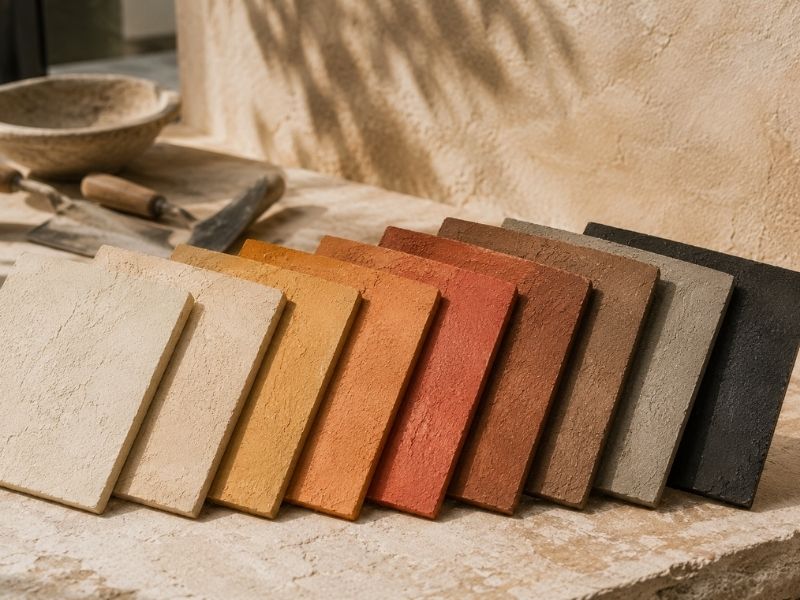
The use of mineral pigments is not a recent fad. On the contrary: it is part of the history of architecture and applied arts.
Ochres, reddish earths, siennas and mineral blacks have been used since ancient times to colour walls, ceramics, cladding and paintings. In Mediterranean architecture, for example, earth tones have always been very present due to their relationship with the landscape, the climate and the materials available in each area.
Almagra, mineral reds and ochres are part of many traditional façades. The siennas and shadows have given depth to interiors, plinths and decorative elements. And mineral blacks have been used to create contrasts, glazes or more sober finishes.
Today, these colors are fully valid again. Not because we want to copy the past, but because they fit perfectly with a more conscious way of understanding spaces: natural materials, honest finishes and colours that never go out of style.
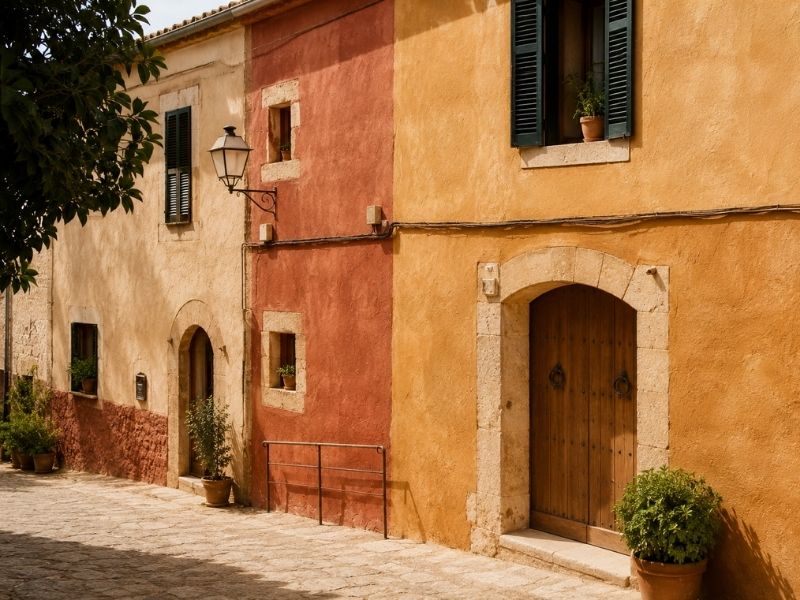
When working with materials such as lime, clay or mineral coatings, the choice of colour should not be made apart from the material. It would not make sense to use a breathable mortar and finish it with a finish that prevents the support from breathing or breaks its natural aesthetics.
Mineral gems are a coherent solution because they allow color to be added without losing the qualities of the construction system.
Among its main advantages are:
The color is not left as a foreign layer, but integrated into the mass or the paint. This generates more natural surfaces with a much richer visual reading.
They go very well with limes, stuccoes, mineral mortars, lime paints and clay paints. That is why they are common in projects where the aim is to improve indoor environmental quality.
The tones coming from earths and oxides have a very interesting aesthetic stability. They do not depend on fast fashions, but on a chromatic palette linked to the landscape: ochres, reds, browns, shadows, blacks, earths and siennas.
A pigmented mineral finish does not age in the same way as a conventional plastic paint. Their wear is usually nobler, more integrated and more coherent with the support.
Even the most intense shades retain an organic look. That’s one of the reasons why they work so well in both traditional refurbishment and contemporary interiors.
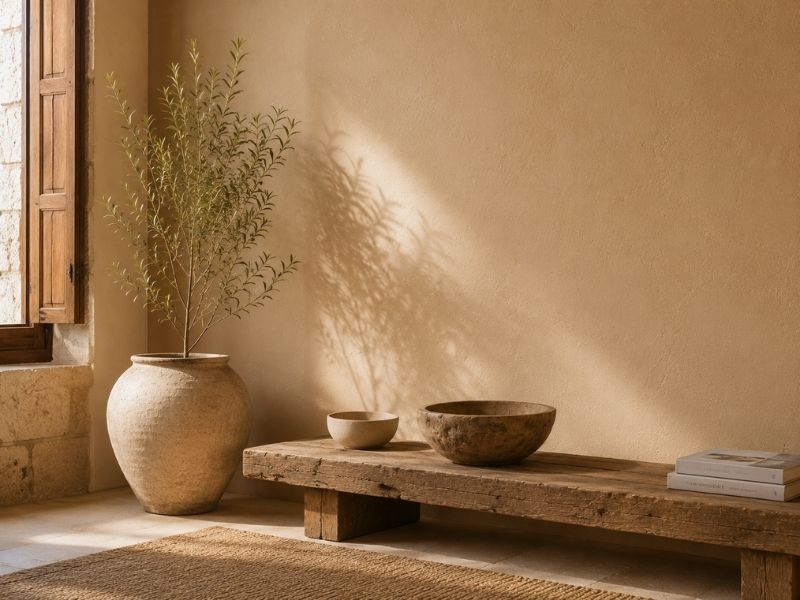
One of the common mistakes is to think that natural pigments are only used to color lime mortars. In reality, its field of application is much broader.
They can be used in:
This versatility makes them a very interesting tool for both construction and restoration professionals as well as for interior designers, decorators, artisans or individuals who want to customize their finishes.
If you are assessing what type of finish to apply in a home, our Guide to decorative coatings can also help you, where we explain how natural materials are transforming today’s interior design.
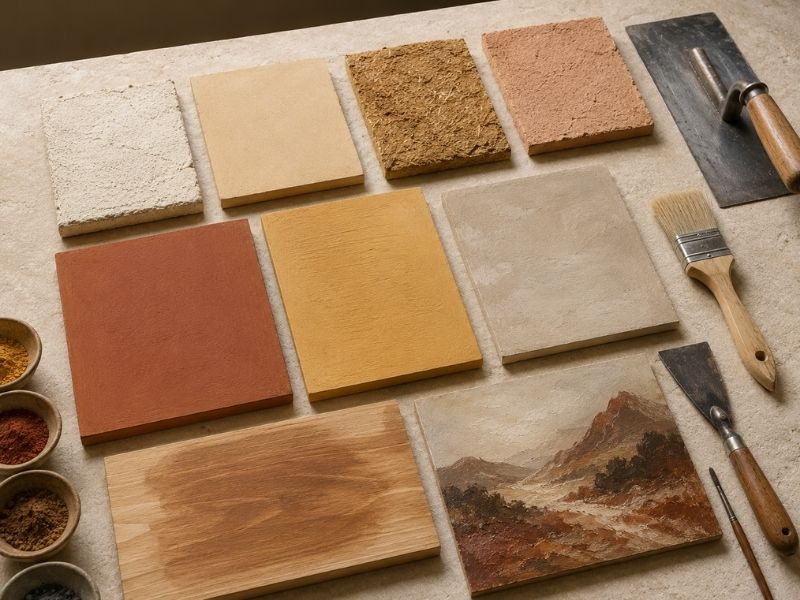
Although we often talk about natural pigments in relation to mortars and stuccoes, they also play an important role in the world of ecological paints.
When combined with mineral paints, they allow for custom shades while maintaining a matte, breathable aesthetic consistent with the bio-construction.
This is especially interesting in interiors where we are looking for more than just changing the color of a wall. A well-chosen eco-friendly paint can help improve the feeling of comfort, avoid plasticized finishes and create a healthier environment.
Earth tones, ochres, siennas and shadows work very well in living rooms, bedrooms, studios, rest spaces and areas where we are looking for visual calm. They also combine naturally with wood, plant fibers, stone, baked clay, clay and lime.
Before starting such a project, we recommend consulting the Eco-Friendly Paint Application Guide, where we explain how to prepare the supports and what to consider before applying lime, silicate or clay paints.
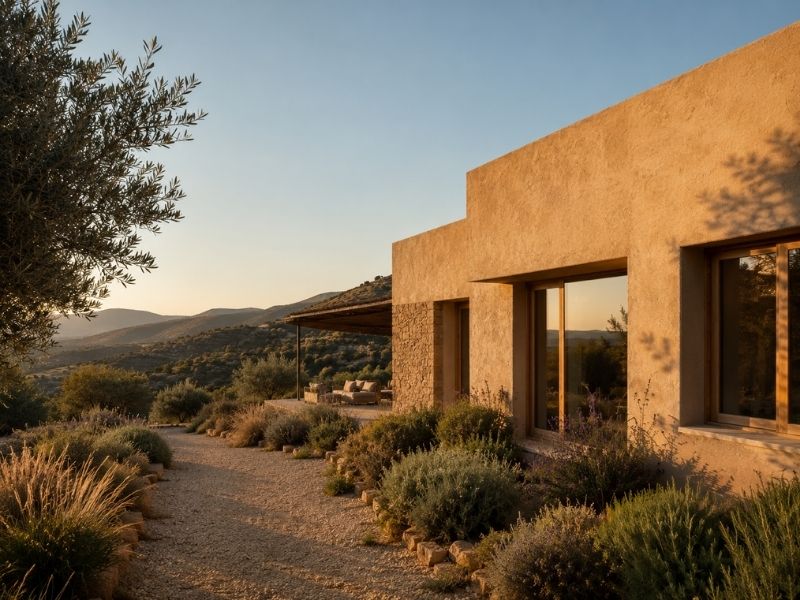
There is no one pigment better than another. The important thing is to choose the shade according to the use, the light, the type of material and the feeling we want to convey.
Ochres are a very welcome choice when we are looking for warmth without darkening the space too much.
The natural pigment powder Ochre 13 provides a warm and luminous tone, very suitable for stuccoes, mineral paints and decorative coatings of Mediterranean inspiration.
Also the Natural Pigment Powder Ocresin 16 can work very well when we want a soft, serene finish that is easy to integrate into today’s interiors.
These shades go particularly well with light woods, natural fabrics, terracotta floors, limestone and lime coatings in neutral tones.
Siennas are very versatile shades. They provide depth, but without being excessively dark. They work very well in homes where a warm, natural and enveloping atmosphere is sought.
The Natural Pigment in Powder Siena Natural 19 is a good option for creating interiors connected to the earth, especially when combined with materials such as wood, clay or lime.
The reference Siena Calcinada 21 offers a more intense and reddish nuance, perfect for projects where greater chromatic character is sought.
Mineral reds and almagras have a direct relationship with traditional Spanish architecture.
The Almagra 17 Natural Pigment Powder is ideal for restoration projects, traditional plasters, facades or finishes that want to recover a heritage aesthetic.
The Malaga Red Natural Pigment Powder connects especially well with the reddish tones of the earth and can be a very interesting option in Mediterranean projects, facades with personality or interventions linked to the local landscape.
In the same vein, the Natural Pigment Powder Red Oxide 31 allows you to achieve more intense reds, suitable for decorative details, facades or custom mixes.
Bioconstruction is not at odds with contemporary aesthetics. In fact, we are seeing more and more modern interiors where natural materials are combined with clean lines, sober furniture and deep colours.
In these cases, dark shades work very well.
The Natural Pigment Black Powder 29 allows you to create elegant contrasts and mineral finishes with a great visual presence.
The Natural Pigment Powder Natural Shadow 23 is a softer alternative, perfect for serene, sober interiors with a natural aesthetic.
Cassel 27 Natural Pigment Powder can also be used when we are looking for a very dark, deep and sophisticated brown.
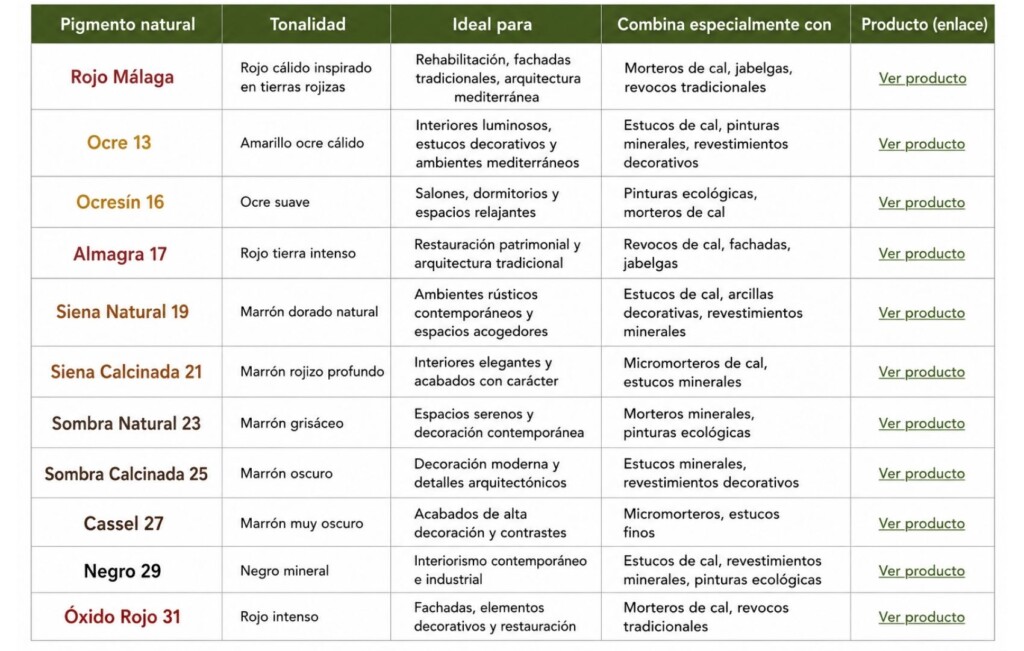
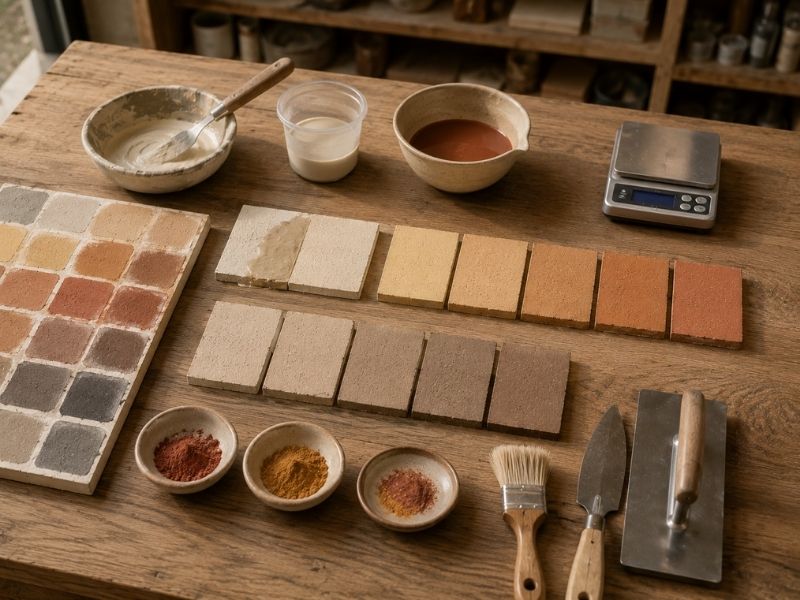
RedVerde’s tip: the final appearance of the color will depend on the type of lime, mortar or paint used, the amount of pigment added, the texture of the support and the light of the space. That’s why we recommend always making a pre-sample before running the full job.
Mineral decorative coatings are experiencing a moment of great growth. More and more architects and interior designers are looking for alternatives to conventional paints to achieve walls with texture, depth and presence.
Lime,clay and mineral micromortars make it possible to create surfaces that not only decorate, but also improve the perception of space.
Natural pigments are essential in this process, because they allow the finish to be customised without betraying the nature of the material.
A lime stucco pigmented with a soft ochre can create a warm and luminous wall. A natural shade can bring serenity to a bedroom. A charred sienna can transform a living room into an enveloping space. And a mineral black can turn a wall into a leading architectural element.
If you want to learn more about this type of finish, we recommend you read the post on natural decorative coatings for interiors and the Guide to decorative coatings.
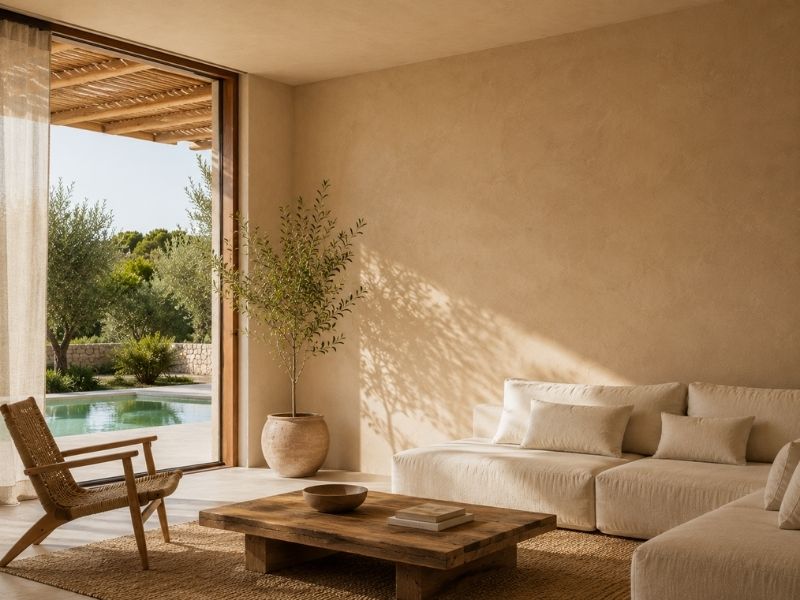
Color is not a superficial decision. It affects how we perceive a space, the feeling of spaciousness, the level of calm, the brightness and visual comfort.
Natural pigments have an important advantage: their tones come from the earth. That is why they fit so well in homes that are looking for a relaxed, warm and healthy aesthetic.
Ochres bring light.
Siennas convey warmth.
The almagras connect with tradition.
Shadows generate depth.
Mineral blacks add elegance and contrast.
This way of understanding color is closely related to healthy design and disciplines such as Feng Shui, where materials, light, order, and color palette influence the overall feel of the space.
At RedVerde we have already addressed this relationship between environment and well-being in the post on Feng Shui and bioconstruction in RedVerde Málaga, an experience that showed the growing interest in designing more balanced and conscious spaces.
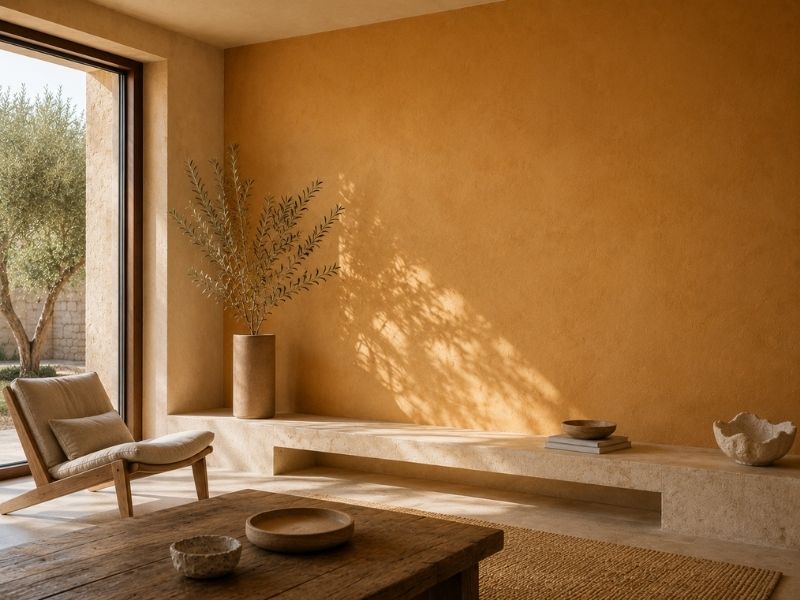
Although working with natural pigments is not complicated, it is advisable to avoid some common mistakes.
This is the most common mistake. The color of the pigment powder is not exactly the final color once mixed with lime, mortar, or paint.
The sample allows you to check the real tone, intensity and drying behavior.
If several mixtures are pigmented, the ratio should always remain the same. Otherwise, color differences may appear between cloths.
The pigment must be evenly distributed. A bad mixture can generate stains, accumulations or areas with different chromatic intensity.
Many mineral finishes lighten when drying. That is why it is advisable to wait until you see the sample completely dry before deciding on the final shade.
The same pigment can look very different in a north-facing room, on a sunny façade or in an interior with artificial warm light.
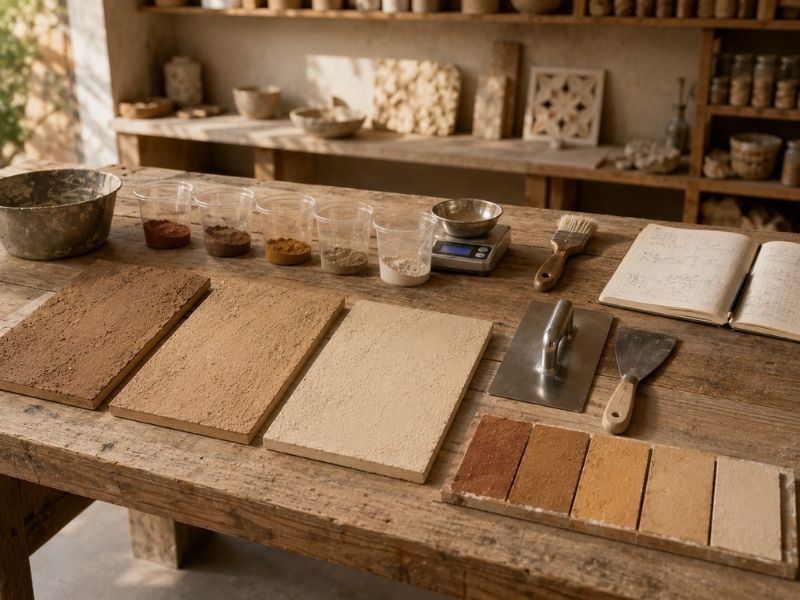
For a bright, natural and Mediterranean home, ochres, soft siennas and earth reds applied in moderation work very well.
Suggested combination:
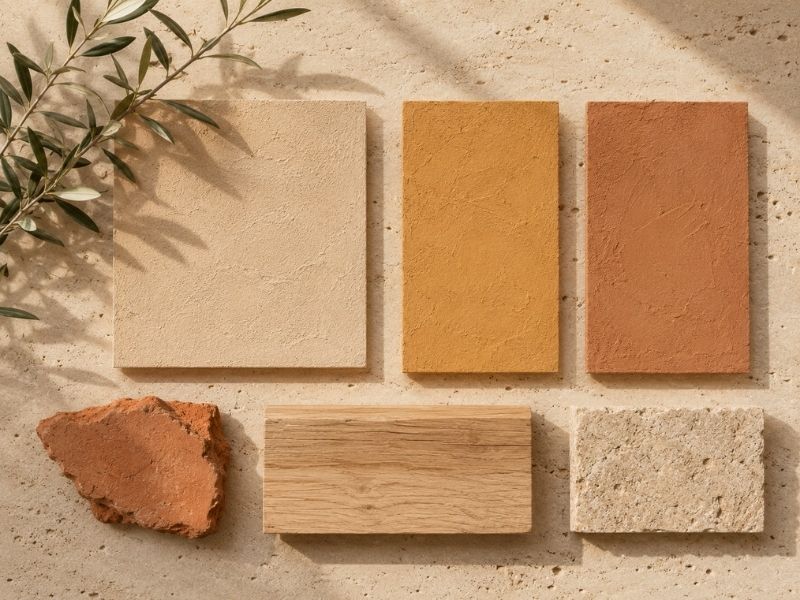
For more modern spaces, we can combine neutral bases with dark and deep tones.
Suggested combination:
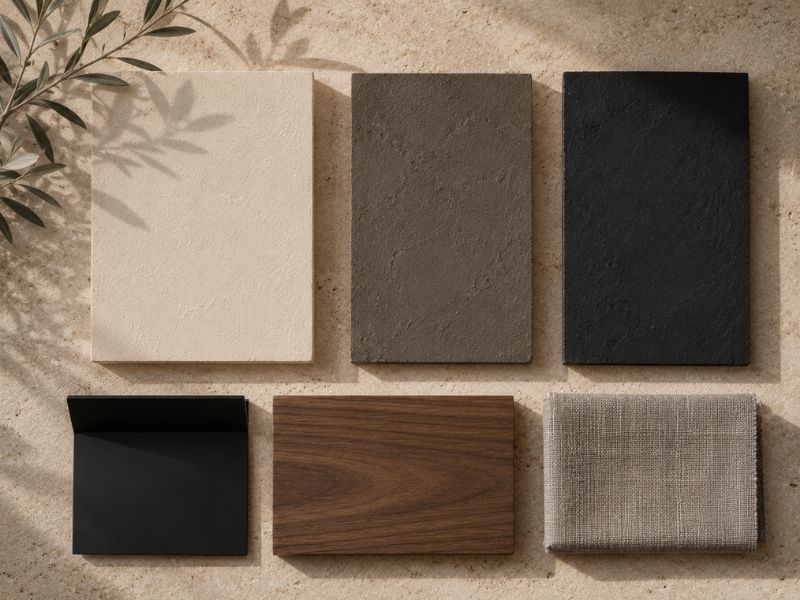
On traditional facades or homes, mineral reds and almagras help to recover an aesthetic linked to popular architecture.
Suggested combination:
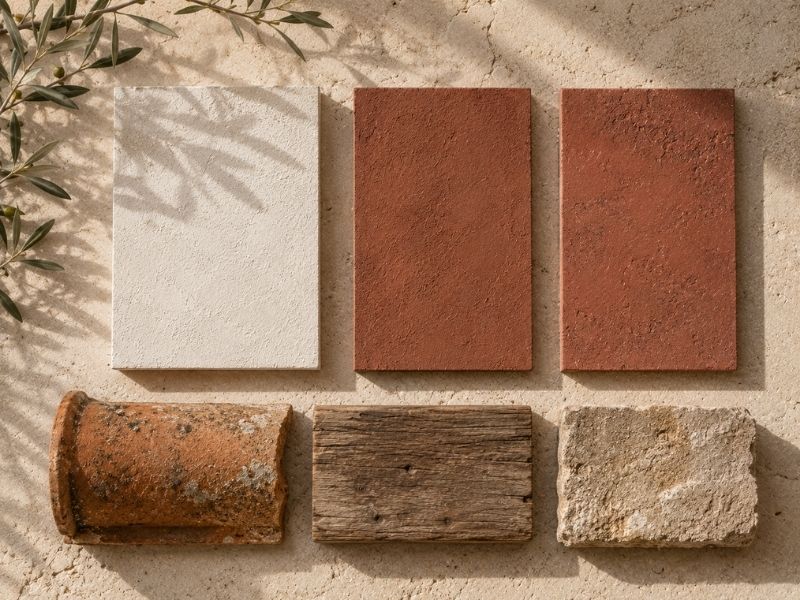
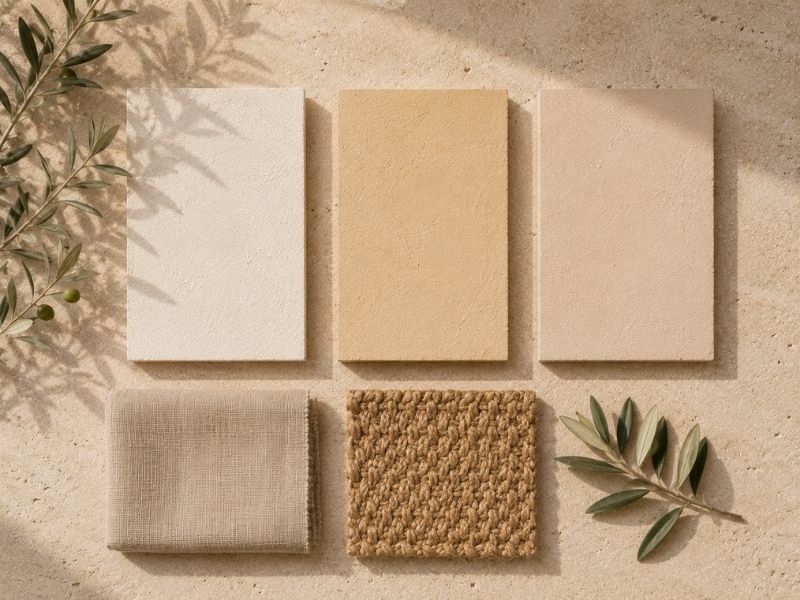
For bedrooms, studios or rest areas, it is advisable to avoid overly aggressive contrasts and opt for soft tones.
Suggested combination:
Yes, as long as the pigment is compatible with the construction system used and is applied within a mortar, paint or coating suitable for exteriors.
Yes. In fact, mineral pigments are one of the most common options for colouring lime mortars, stuccoes and jabelgas. It is important to use pigments compatible with alkaline media.
It depends on the base material, the desired tone and the intensity sought. It is advisable to carry out tests with small quantities and repeat exactly the chosen proportion throughout the work.
Not necessarily. The color changes when mixed with the binder and usually lightens when drying. That is why it is essential to carry out previous samples.
Yes. It is common to combine pigments to achieve personalized shades. The important thing is to write down the proportions so that you can repeat the mixture.
Yes, as long as they are compatible with the chosen paint. In mineral and ecological paints, they can help to obtain personalized colors while maintaining a natural aesthetic.
Mineral pigments usually have good color stability, especially when used correctly within suitable mineral systems.
Choosing a natural pigment is not just choosing a color. It is deciding how we want the material to behave, how we want the surface to age and what relationship we want to establish between the house and its environment.
Natural pigments allow traditional techniques to be recovered without sacrificing contemporary design. They work in an old house, in a current home, on a restored façade or in a minimalist interior.
From the warmth of Malaga Red to the luminosity of Ochre 13, from the depth of Siena Natural 19 to the elegance of Black 29, each pigment offers a different way of working colour from the material.
At RedVerde you will find a careful selection of natural pigments for bio-construction, rehabilitation, healthy decoration and mineral finishes.
Because building sustainably also means choosing colours that are born from the land itself.