If you are thinking of renovating your home or giving a space a makeover , it is normal to have doubts when you hear about ecological paints, lime, silicate or clay. This guide is designed to help you:
Understand in a simple way what options you have.
See what you can do with your current wall (plaster, plasterboard, dripping, plastic paint, etc.).
Choosing the eco-friendly coating that best suits your project: – Lime paints – Silicate paints – Clay paints
You don’t need to have technical knowledge: let’s go step by step, with clear language and common examples of work. For more technical questions, tools, application techniques, etc., you can always consult the product sheets or ask us for help.
2. Defining Current Support
Before choosing eco-friendly paint, the first step is to know what we are starting from: What type of wall do I have now and what am I willing to do with it?
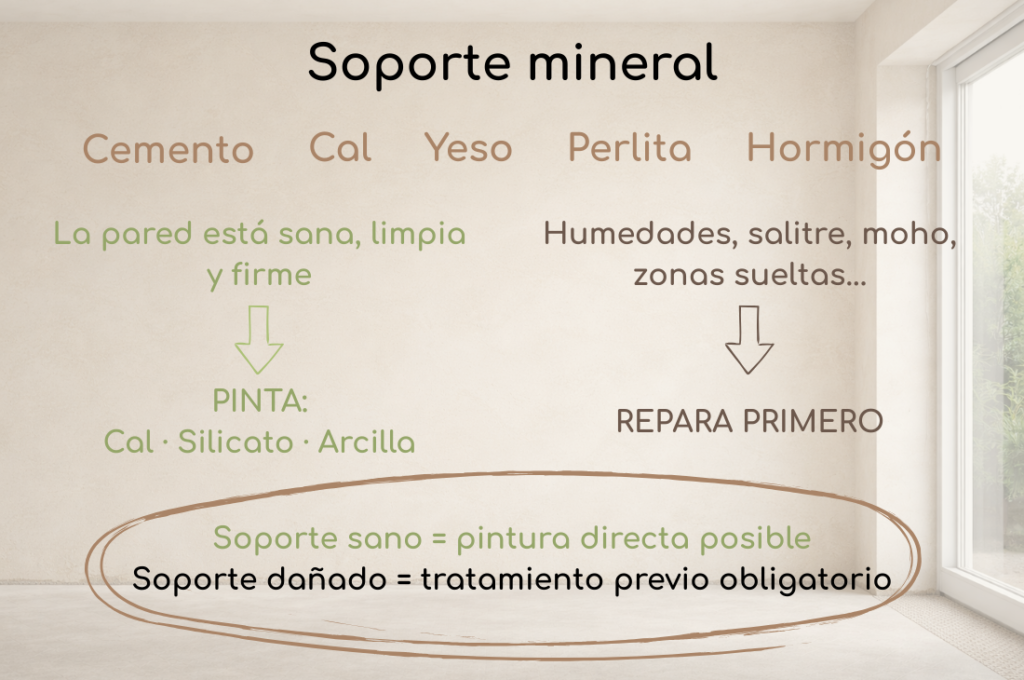
2.1 Mineral support
They are walls made with materials such as:
Cement
Lime
Plaster
Perlite
Concrete: These are usually the “brick” walls or traditional plaster. Key question: are they in good condition (firm, without moisture, without major chips)?
If the wall is healthy, clean and firm → good preparation will usually suffice and you can apply a lime, silicate or clay paint.
If there is damp, saltpeter, very loose areas or mold → it will be necessary to treat the problem first (not just “cover” with paint).
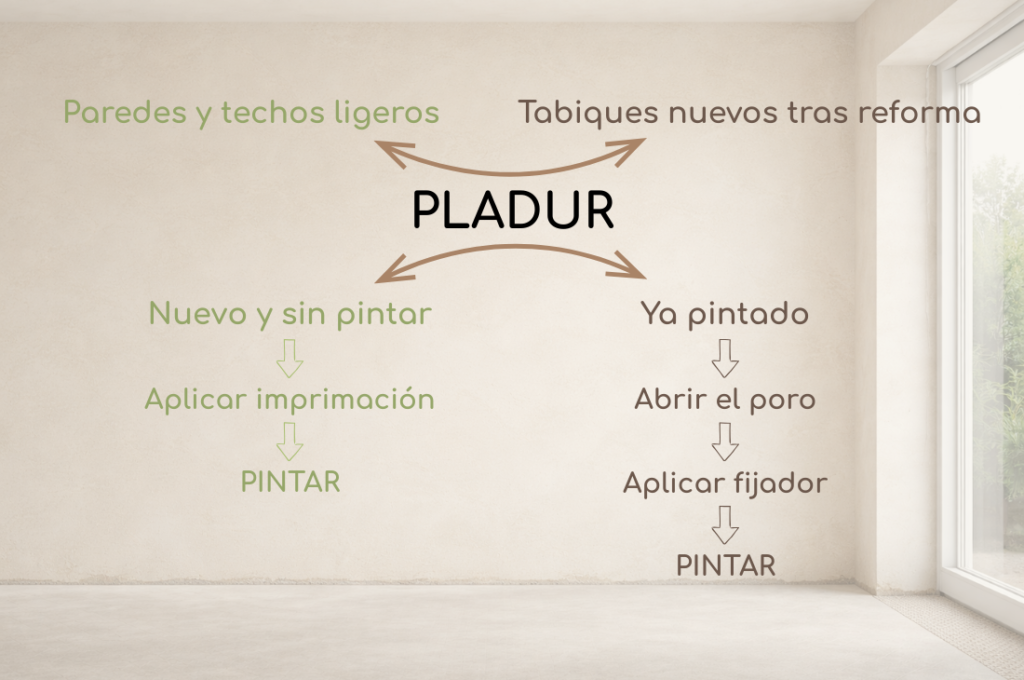
2.2 Pladur (laminated plasterboard)
Plasterboard is a very common support in interior renovations:
Light walls and ceilings.
New partitions that have been raised in a renovation.
Here it is important to know if it is:
New unpainted plasterboard.
Plasterboard already painted with plastic paint.
In both cases you can work with organic products, but the preparation will be different.
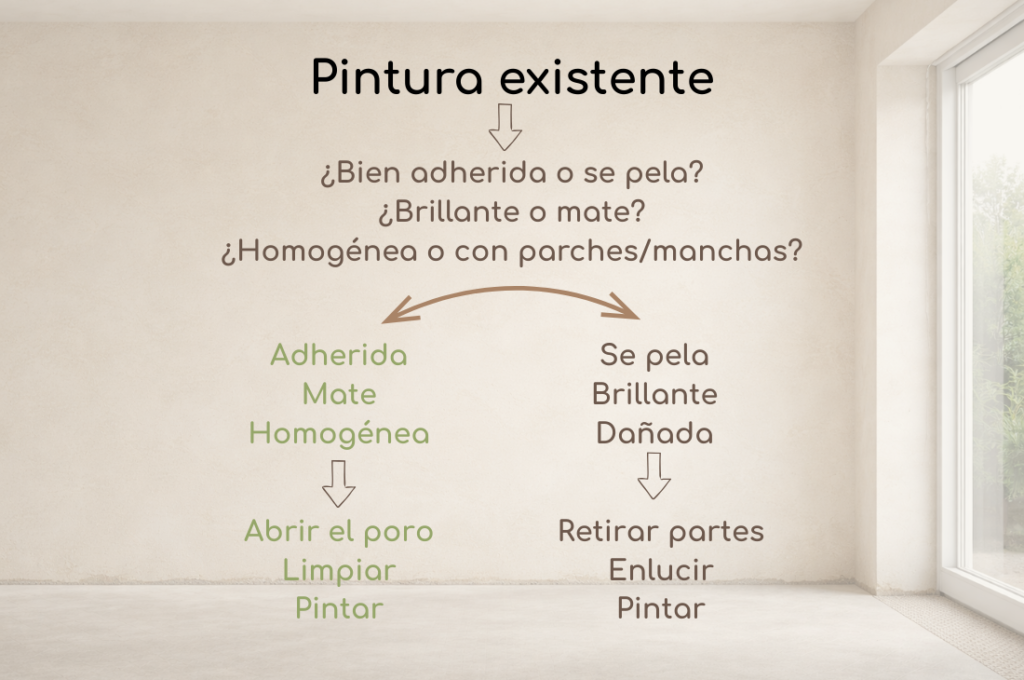
2.3 Existing paint
Many walls already have several layers of plastic paint (normal, satin, even with very intense tones).
Important questions:
Is the paint adhering well or peeling easily? (can be checked with a simple duct tape test).
Is the surface matte or highly satin/glossy?
Are there any repaired areas, patches, or stains?
Based on this, we will decide whether:
We just need to open the pore and clean
It is advisable to remove parts or regularize with a plaster (plaster, lime, clay…).
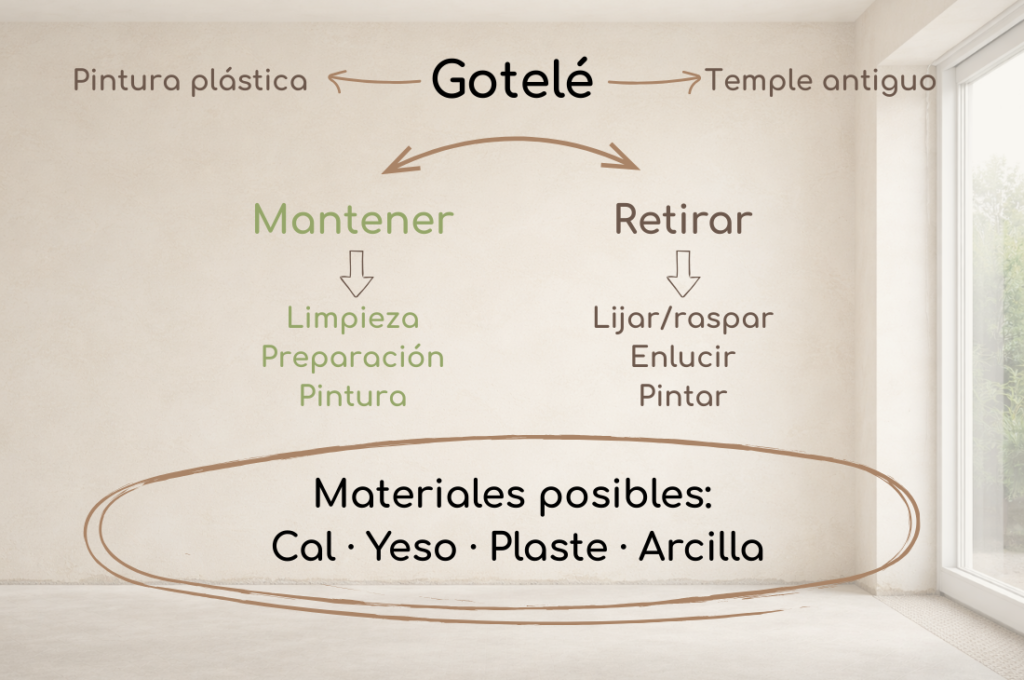
2.4 Gotelé
In many homes there is still gotelé; It can be:
In plastic paint.
In ancient tempera.
Key step: decide if you want to keep the stipple and only apply an ecological paint, or remove it and get a smooth wall for a more decorative finish. From that decision will come sanding, scraping or plastering with lime, plaster, plaster or clay.
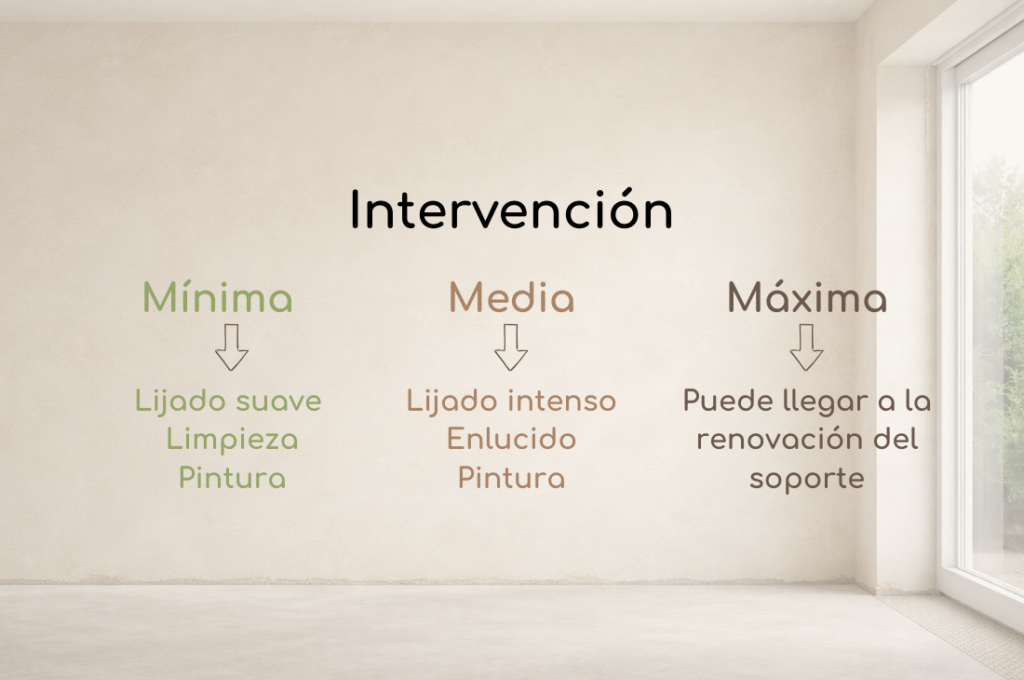
2.5 Decision on the degree of intervention
Once the support has been identified, it is advisable to be clear about how far we want to go:
Minimal intervention
Gentle sanding of the current paint.
Cleaning and touch-ups.
Direct application of the new compatible coating. to choose the option that best balances aesthetic result, budget and construction time.
Medium intervention
More intense or nuanced sanding of the stipple beetle.
Plastering the wall with plaster, plaster, lime or clay to improve the support.
High intervention
Removal of paint layers.
Removal of stipple (if applicable).
In some cases, removal and renewal of the substrate (very deteriorated, severe dampness, etc.).
The guide will help you choose the option that best balances aesthetic result, budget and construction time.
3. Preparing the Stand
Once the level of intervention has been decided, we move on to the preparation of the support. This is where the success of the work really comes into play: a good ecological paint needs a suitable base.
In this section, several alternatives are offered for the client to choose the one that best suits their case. We will always recommend the most suitable RedVerde products in every situation.
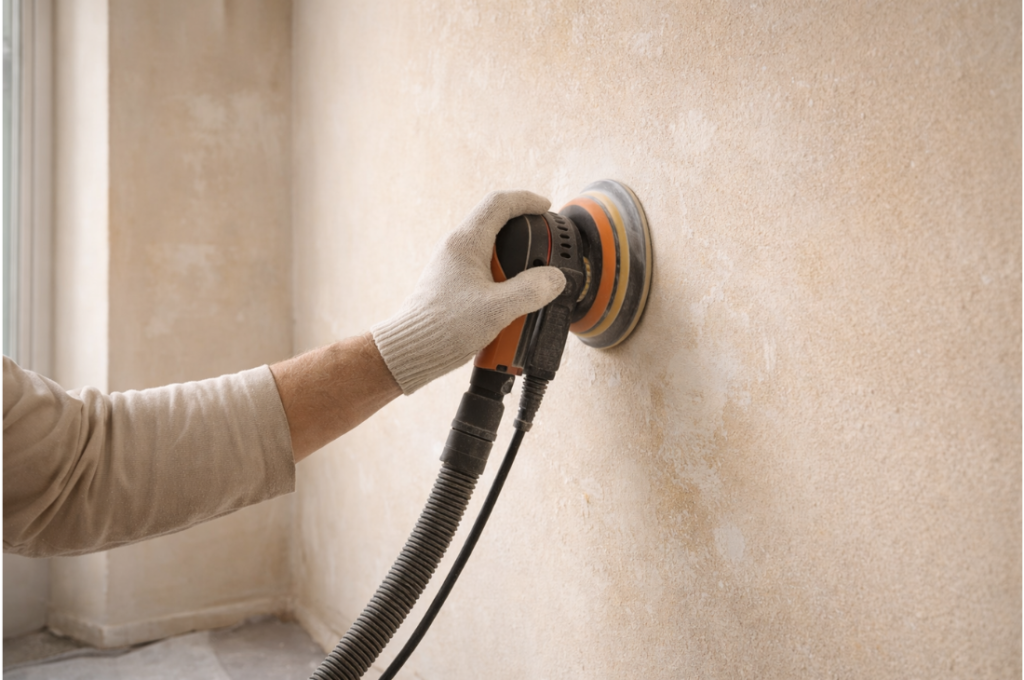
3.1 Sanding the current support
When it is used:
Plastic paints in good condition but very satin or with several coats.
Gotelé that is to be “reduced” but not completely eliminated.
Objective:
Open the pore and improve adhesion.
Adjust the texture slightly.
Basic steps:
Protect the area well (there is a lot of dust).
Sand with the appropriate grain (manual or machine, depending on the surface).
Vacuum or carefully wipe dust.
3.2 Removal of current support and application of a new one
When it is proposed:
Gotelé that you want to eliminate completely.
Very deteriorated plaster, with many layers of paint, saltpeter or old damp.
Possible solutions:
Remove the old coating until you reach a healthy support.
Apply a new substrate: lime mortar, plaster, lime or clay plaster, etc.
This option involves a more intense work, but leaves the wall fully prepared to receive ecological paints with the best possible performance.
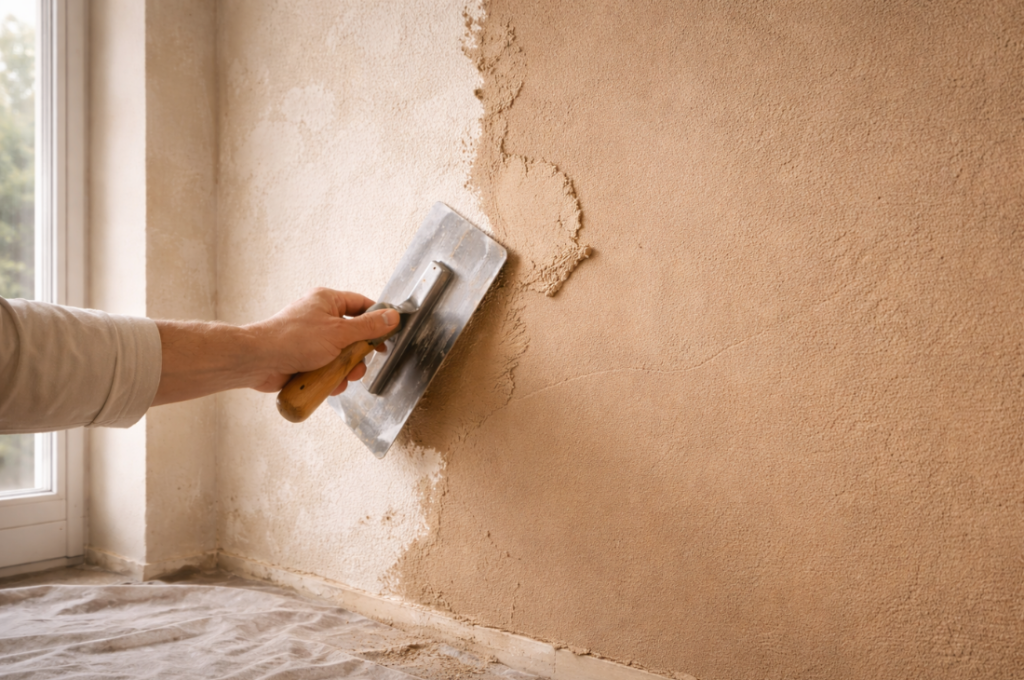
3.3 Plastering the current support
It is a very common and versatile solution: “I take advantage of what I have, but I regularize it with a new layer.”
Common plastering materials:
Lime plasters
Natural plaster
Plaster
Clay mortars or plasters
When it matters:
To soften or cover stipple.
To regularize walls with small defects, patches and repairs.
To get closer to a support more compatible with lime, silicate or clay.
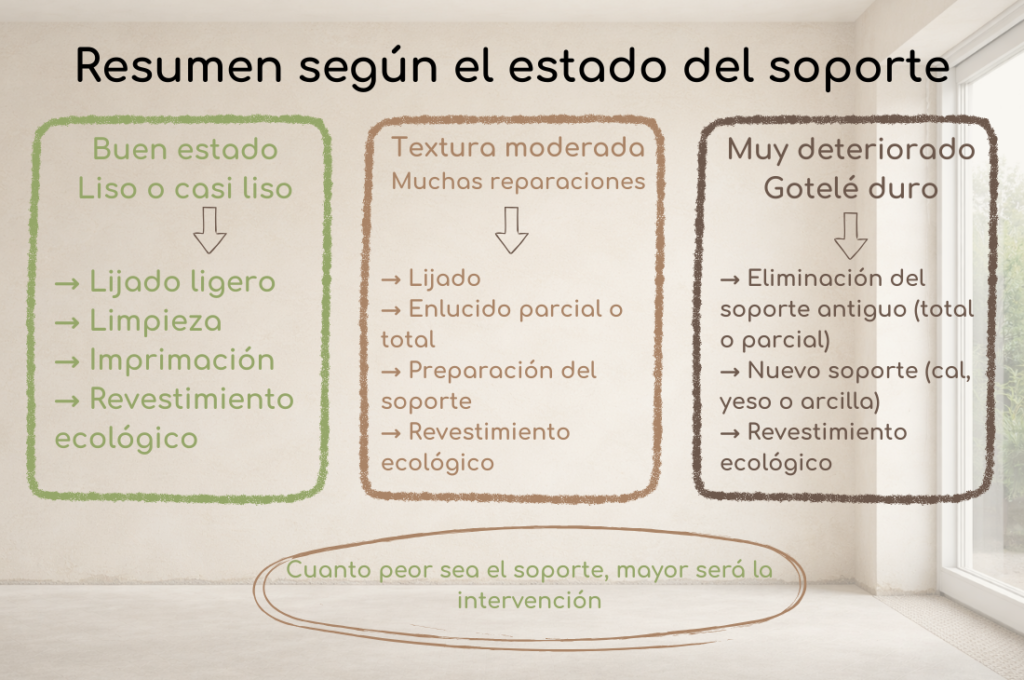
3.4 Summary of Options Based on Support Status
Support in good condition, smooth or almost smooth → Light sanding + cleaning + primer (if it is necessary) + ecological coating.
Support with moderate texture (soft stipple) or many repairs → Sanding + plastering Partial or total + preparation + ecological coating.
Very deteriorated support or with “hard” stipple that you want to remove → Removal of the old support (or part of it) + new support (lime, plaster, clay…) + coating ecological.
4. Choosing the Decorative Paint
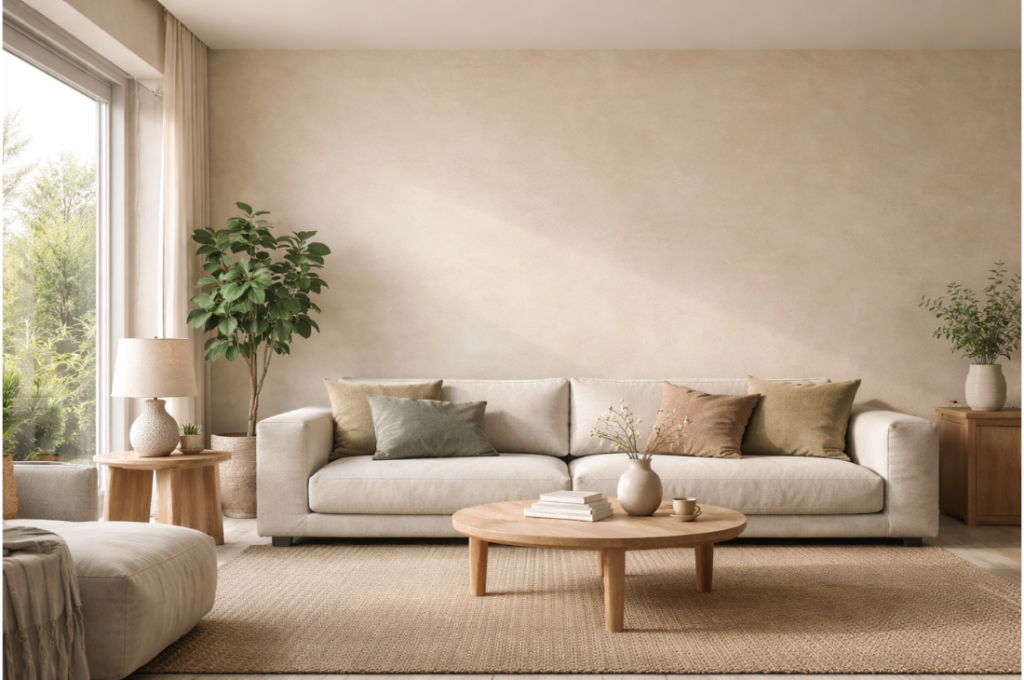
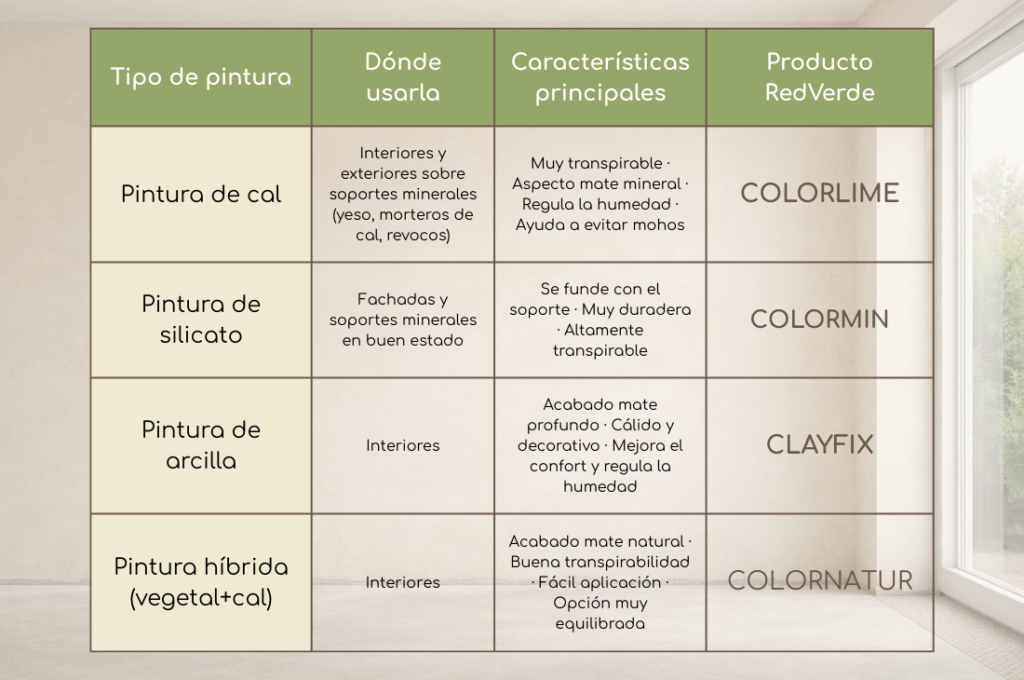
Now that we are clear about the support and how we are going to prepare it, comes the most grateful part: choosing the ecological finish that we want to see every day in our home. The main final systems that we recommend from RedVerde are:
Lime paint
Silicate paint
Clay Painting
4.1 Lime paint
Ideal for mineral walls (plaster, lime mortars, plasters). Highly breathable and with Mineral matte appearance. Helps regulate ambient humidity and prevent molds.
Preferably mineral or compatible plaster support (plaster, lime, clay).
Cleaning and application of primer.
Application of 2 coats of clay paint, as indicated in the technical sheet.
4.4 Hybrid Vegetable Paint + Lime
Balanced option for interiors, combining plant components with lime. It offers a natural matte finish, good breathability and very suitable behaviour in living spaces, helping to regulate ambient humidity and improve interior comfort.
If you have doubts about your wall or don’t know which system to choose, you can contact the team from the form on the website or call us directly from the Contact.
THEKSFACTORY SL es responsable de la página web redverde.es, y utilizamos cookies y/u otros archivos de funcionalidad similar para analizar nuestros servicios y mostrarte publicidad relacionada con tus preferencias en base a un perfil elaborado a partir de tus hábitos de navegación (como por ejemplo, las páginas visitadas). Puedes aceptar todas las cookies pulsando el botón "Aceptar", rechazar las cookies no necesarias pulsando el botón "Denegar", o configurar su uso pulsando el botón "Ver preferencias". Para más información consulta nuestra Política de Cookies.
Funcional
Always active
El almacenamiento o acceso técnico es estrictamente necesario para el propósito legítimo de permitir el uso de un servicio específico explícitamente solicitado por el abonado o usuario, o con el único propósito de llevar a cabo la transmisión de una comunicación a través de una red de comunicaciones electrónicas.
Preferencias
El almacenamiento o acceso técnico es necesario para la finalidad legítima de almacenar preferencias no solicitadas por el abonado o usuario.
Estadísticas
El almacenamiento o acceso técnico que es utilizado exclusivamente con fines estadísticos.El almacenamiento o acceso técnico que se utiliza exclusivamente con fines estadísticos anónimos. Sin un requerimiento, el cumplimiento voluntario por parte de tu proveedor de servicios de Internet, o los registros adicionales de un tercero, la información almacenada o recuperada sólo para este propósito no se puede utilizar para identificarte.
Marketing
El almacenamiento o acceso técnico es necesario para crear perfiles de usuario para enviar publicidad, o para rastrear al usuario en una web o en varias web con fines de marketing similares.