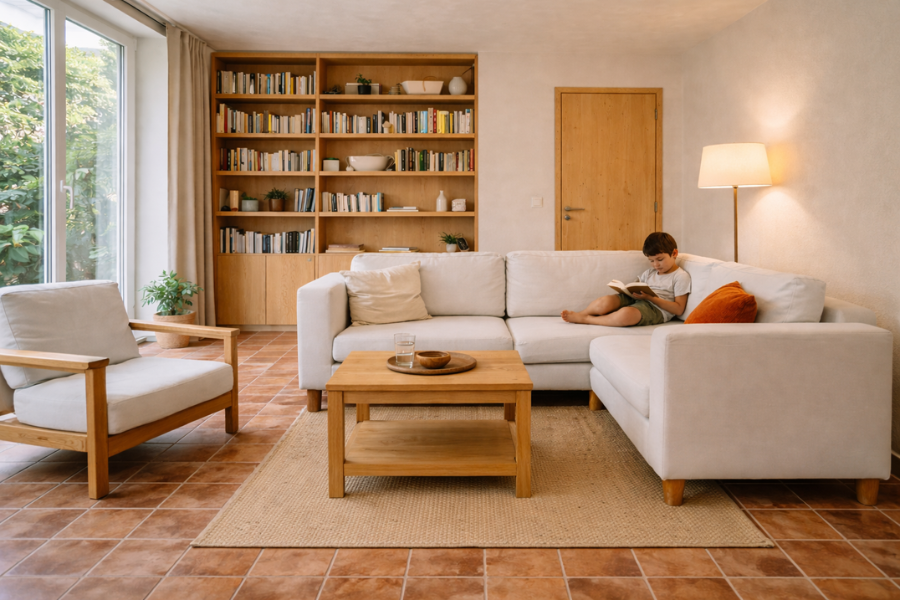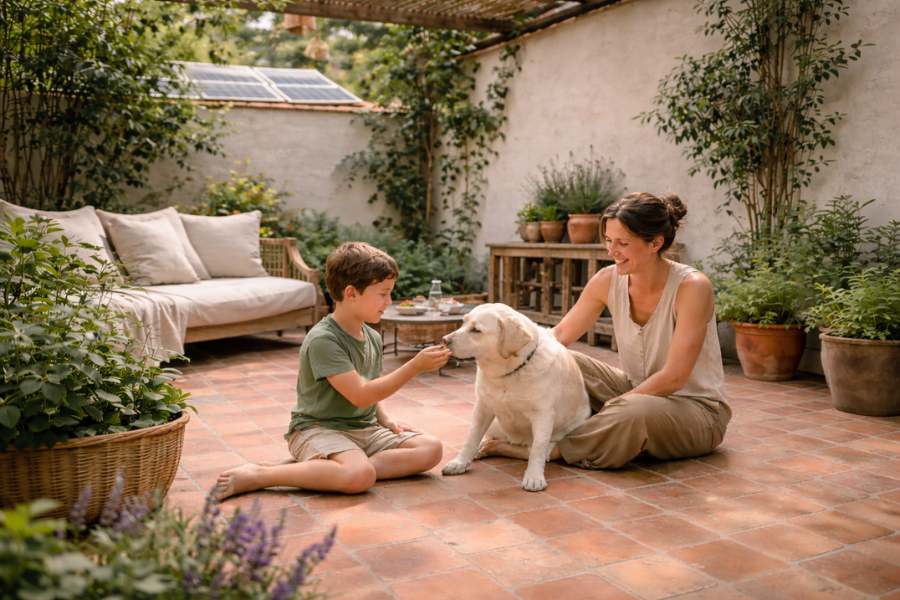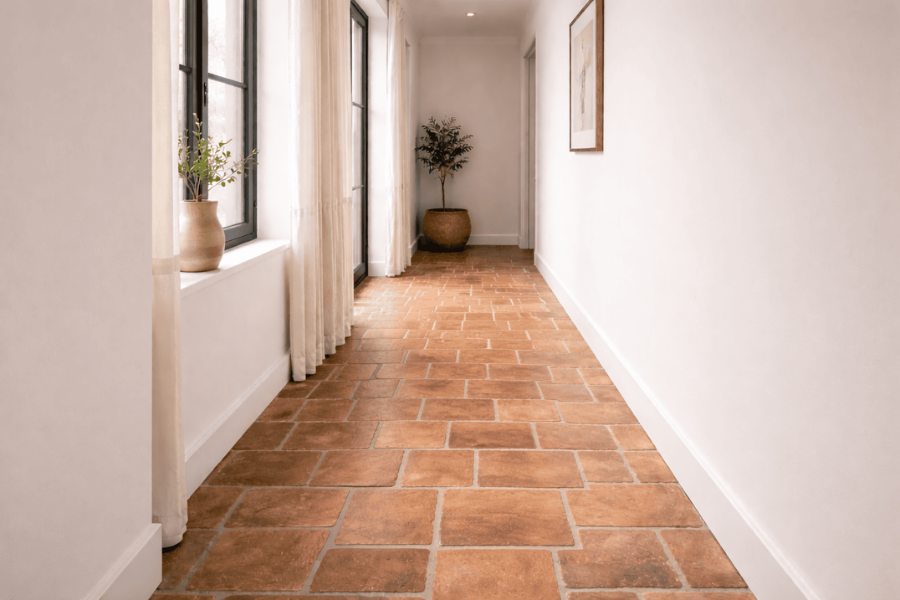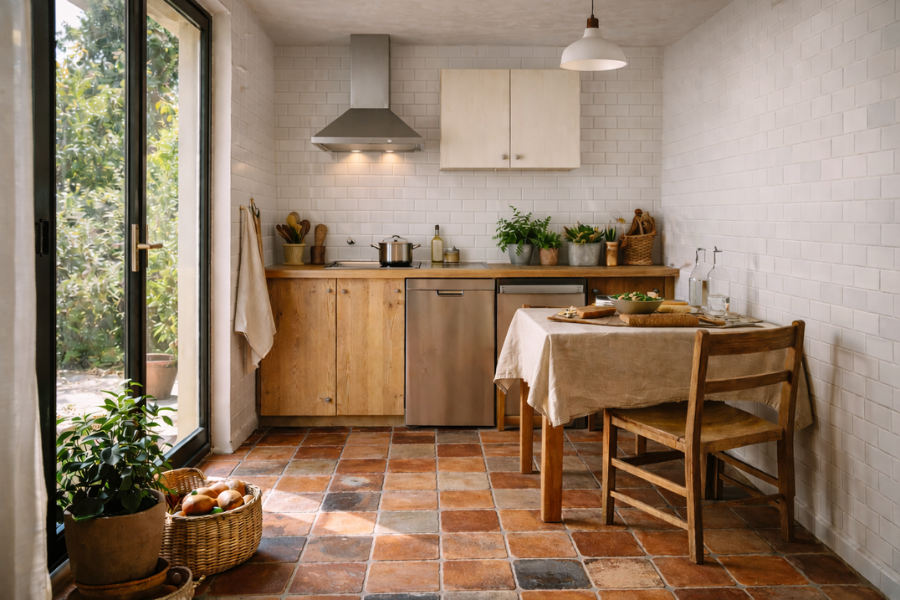

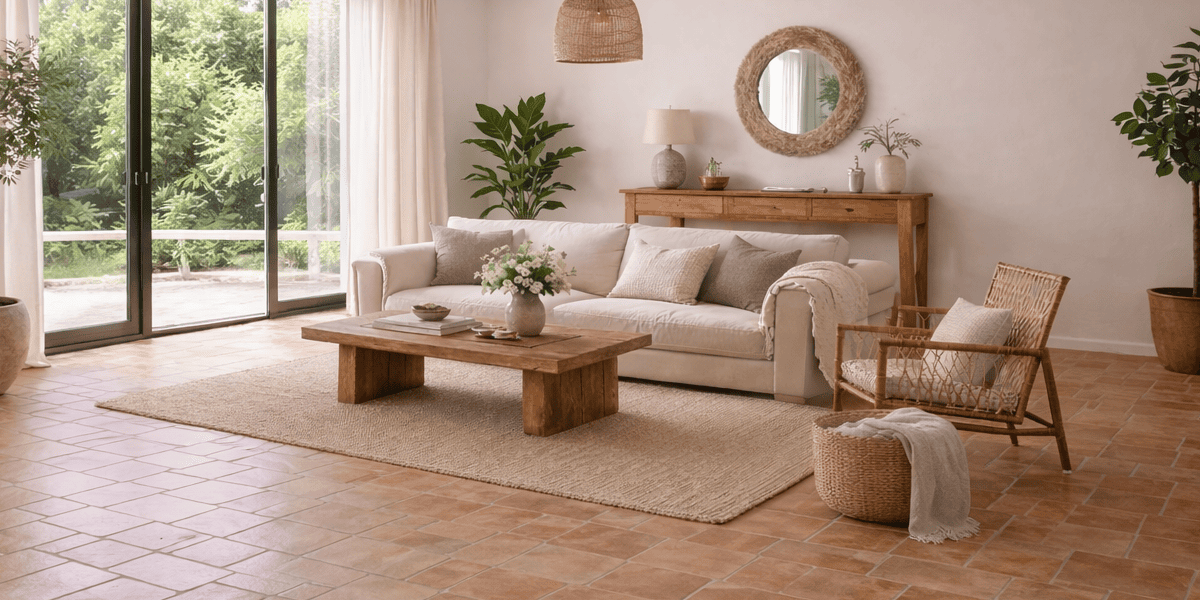
Mud floors, also known as terracotta floors, are one of the most popular options in traditional homes, rural houses and renovation projects.
Their warm aesthetics, natural origin and great durability make them a timeless flooring that, well cared for, can last for generations. In this article we explain what terracotta floors are, how they were maintained in the past, what problems arise if they are not protected correctly and what is the best way to treat them naturally today.
Terracotta clay or terracotta tile floors are made from natural clays fired at low temperatures. This gives them a porous texture and a unique finish, with color variations ranging from red to ochre.
They are very common in:
The use of mud as pavement dates back thousands of years. Civilizations such as the Roman Empire already used ceramic floors in villas, baths and public buildings for their resistance and ease of maintenance.
For centuries, terracotta floors were the most common material in Mediterranean homes, wineries and agricultural buildings, reaching the present day as a symbol of traditional and sustainable architecture.
Before modern varnishes, the treatment of terracotta floors was carried out with natural products. Among the most used were:
These methods were used to:
This type of mud floor oil allowed the material to continue breathing.
Nowadays, more and more people are looking for natural and sustainable soils. Terracotta stands out for:
A well-maintained mud floor does not deteriorate over time, it improves.
When proper products are not used, it is common to find:
In most cases, these problems appear due to the use of synthetic sealants or overly aggressive products that close the pore of the mud.
For a correct cleaning of terracotta floors , it is recommended:
The objective is to protect without plasticizing.
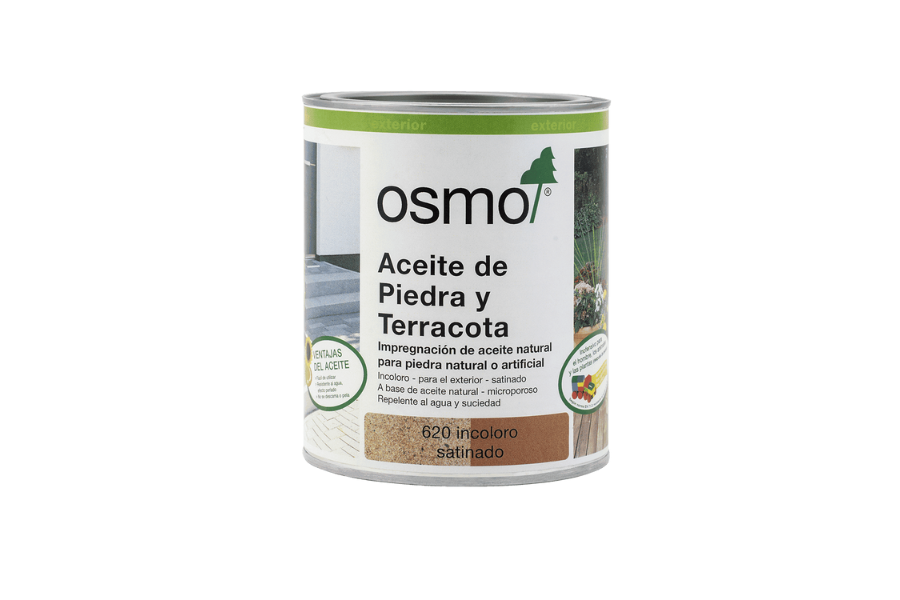
Following tradition, but adapting it to current needs, there are specific solutions such as Stone and Terracotta Oil, formulated to protect porous materials without altering their nature.
This type of terracotta protective oil:
It is a particularly suitable solution for those looking for how to protect a mud floor naturally.
A good treatment extends the life of the soil and maintains its beauty for decades. At RedVerde we believe that terracotta and terracotta floors should be cared for as they have always been done: with products that respect their origin and function. Betting on natural solutions is the best way to preserve them today and in the future.